
Top 7 Conversational AI Platforms in 2026
November 11, 2026 · 6 min read
 Conversational AI platforms now span chat, voice and messaging channels
Gartner published its 2026 Magic Quadrant for Conversational AI Platforms in July, and the result was a reshuffle. Google, Salesforce, SoundHound AI and Kore.ai landed in the Leaders box. Boost.ai and NiCE Cognigy, both Leaders a year earlier, slipped down a tier.
That shift says something useful. A few years ago, buyers compared chatbot features. Now they compare channel coverage, governance and how a platform plugs into the stack they already run. A bot that answers FAQs on a website is table stakes.
This list covers seven conversational AI platforms, from messaging-heavy CPaaS stacks to voice-first systems. We look at their features, strengths and ideal use cases to help you understand which one might fit your business.
1. Infobip
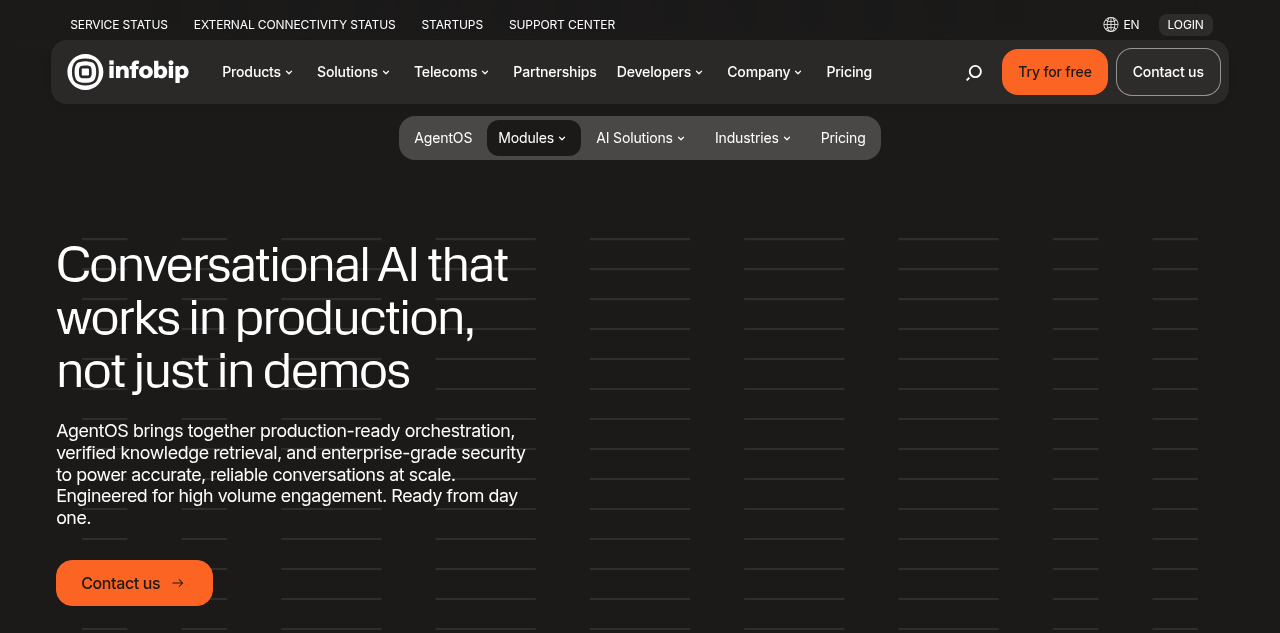
Infobip website
Infobip is among the best conversational AI platforms for brands that need to reach customers across messaging and voice channels. Its AgentOS platform supports more than 15 channels natively, according to the company, including WhatsApp, Viber, RCS, SMS, voice, email, Instagram, Messenger, Apple Messages for Business, LINE, KakaoTalk and Telegram. For a brand that sells across several regions, that spread is the main draw. Customers in Brazil, Korea and Germany rarely use the same app, and one platform covering all of them cuts a lot of integration work.
The design is also model-agnostic. Infobip names OpenAI GPT, Llama and Gemini as options, so you aren’t locked to a single provider. Teams can build in no-code, low-code or pro-code, and developers get SDKs for Python, Node.js, Java, PHP and .NET, plus MCP support and Python agents built on LangGraph and AutoGen. Cloud and on-premises deployment are both available, which matters for regulated buyers.
On control, AI Guardrails filter inputs and outputs and check responses against business rules. Intent routing sends conversations to an AI agent or a human, and Active Recall carries history across conversations so customers don’t repeat themselves. A Multimedia FAQ feature returns only pre-approved answers. Native integrations cover Salesforce, Zendesk and Microsoft Dynamics.
Infobip's Agentic Chunker also enhances search accuracy by improving how information is retrieved and ranked. According to the company, pairing it with a cross-encoder increases vector search recall from 70% to 95%, helping AI agents find more relevant information and deliver better responses.
Best for: brands that need messaging and voice under one roof at scale.
2. Kore.ai
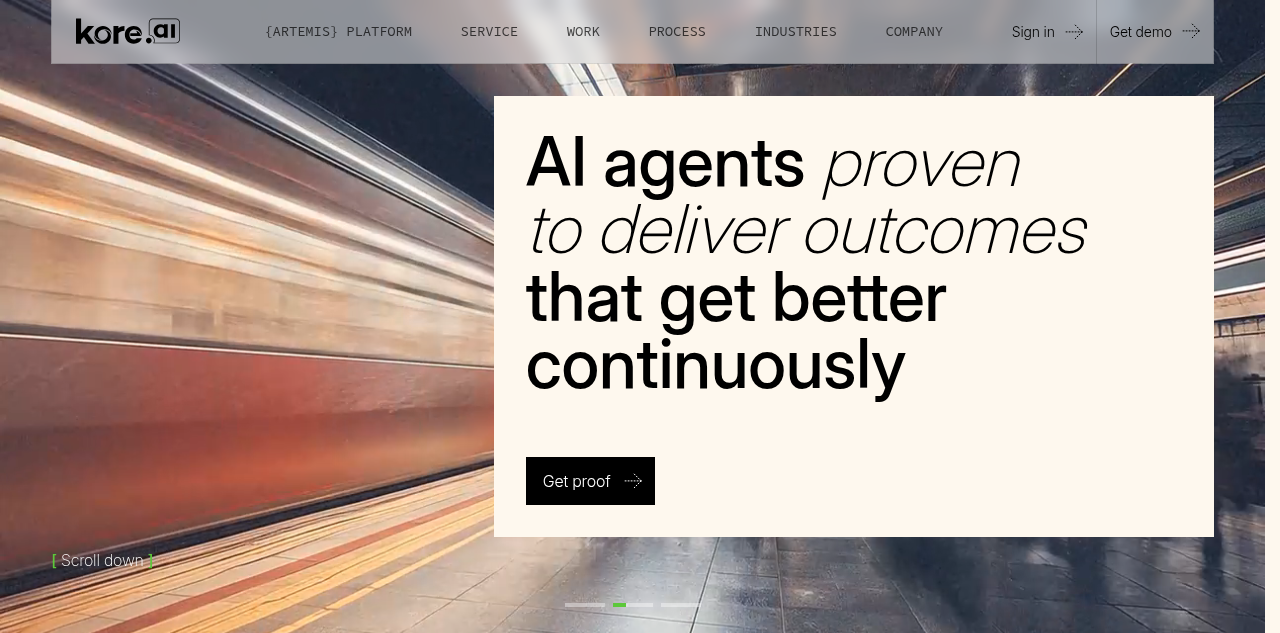
Kore.ai website
Kore.ai is one of the four 2026 Gartner Leaders. According to CX Today’s coverage of the report, Gartner credited its research and development work, its service-level terms and a wide partner network. The company also lists a Leader position in the Forrester Wave for Conversational AI Platforms for Employee Services (Q3 2026).
The platform has separate lines for customer service, work and process automation. It describes components such as Autoloop for optimization, Agent Blueprint Language (ABL) for defining agents, and ARCH, an AI solution architect. Compliance listings include SOC, HIPAA, GDPR, PCI DSS and CCPA, and the logo wall features AT&T, Bosch, Cigna, Coca-Cola and MetLife.
Best for: large enterprises that want one vendor across service, employee and process automation.
3. Google Gemini Enterprise for Customer Experience
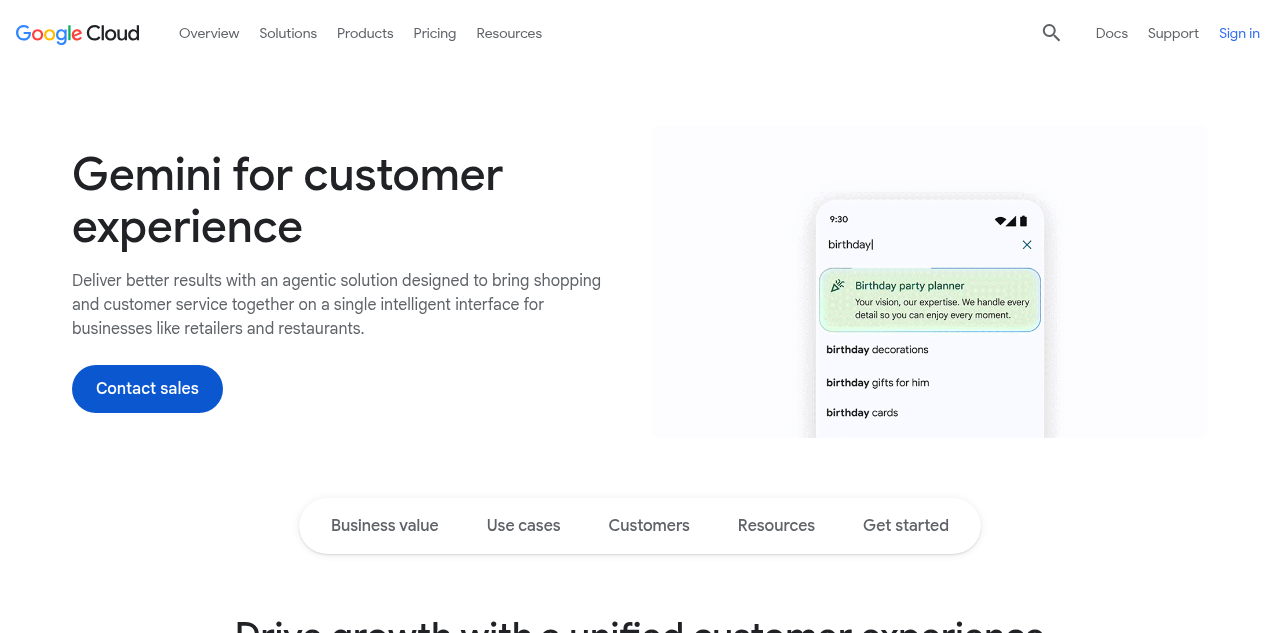
Google Gemini Enterprise for Customer Experience website
Google is a Leader for the second year running. In its own announcement, it says it ranked furthest on Completeness of Vision and highest on Ability to Execute, and first in three of the four Critical Capabilities use cases. Treat that as Google’s reading of the report, not an independent summary.
CX Agent Studio lets teams build multimodal agents for voice and chat, with pre-built agents for retail, food ordering and automotive. The headline example is The Home Depot, where voice agents identify why a customer is calling in under 10 seconds, and Google says solutions run up to four times faster than phone menus.
Best for: companies already building on Google Cloud that want strong voice and multimodal models.
4. Salesforce Agentforce
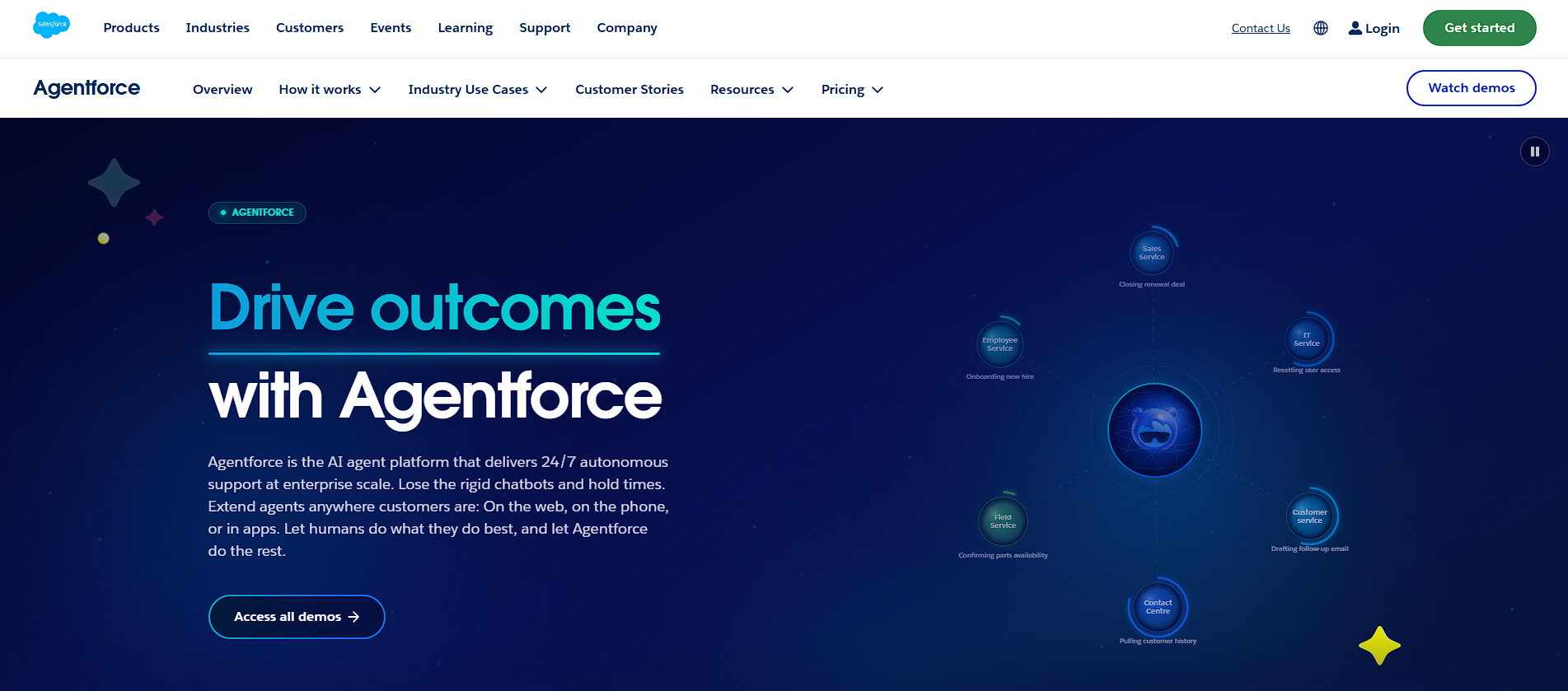
Salesforce Agentforce page
Salesforce is new to this Magic Quadrant and debuted as a Leader. CX Today reports that Gartner praised the pricing clarity of Flex Credits and the library of 300-plus prebuilt agent templates.
The company says more than 18,000 companies run on Agentforce. Agent Builder is low-code, and the platform offers multi-agent orchestration, Agentforce Voice and MCP support. Named customers include OpenTable, Finnair, Heathrow, Fujitsu and Indeed. You can start free with Salesforce Foundations, then pay through Flex Credits, per resolution or per user.
Best for: teams whose customer data already sits in Salesforce.
5. SoundHound AI
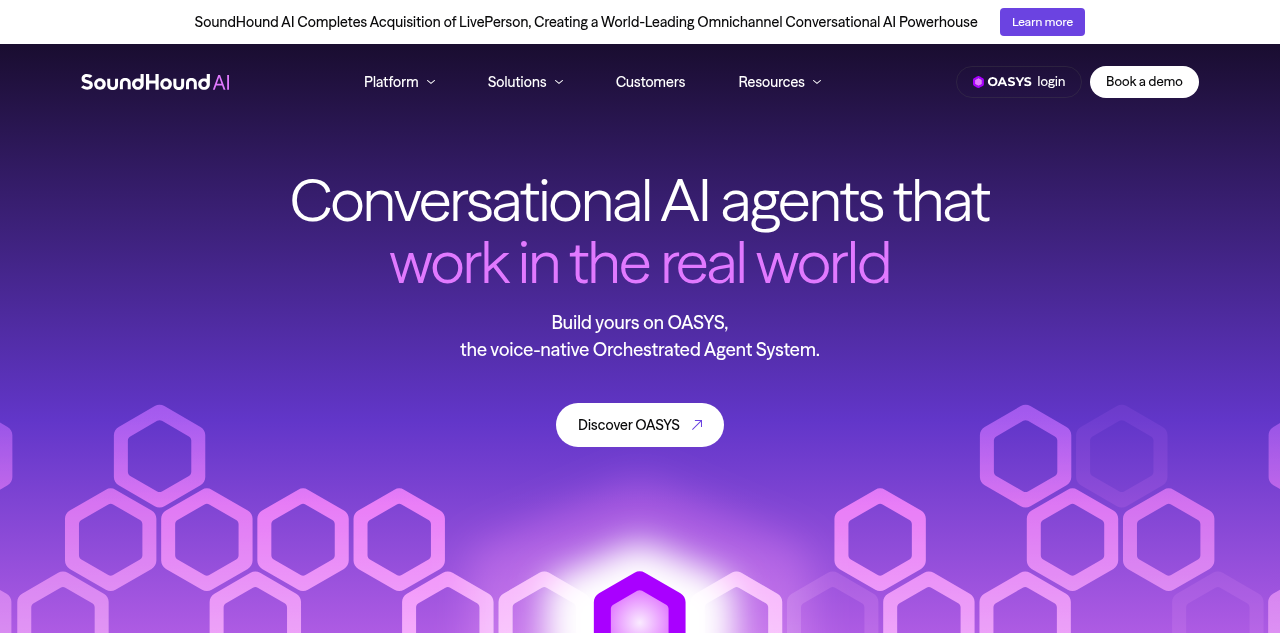
SoundHound AI website
SoundHound moved up from Visionary to Leader. Gartner highlighted its native speech recognition, real-time voice-to-voice models and a partner-first go-to-market, according to CX Today. If your main channel is the phone, this is the most voice-native option on the list.
The company says it handles 10 billion conversations a year, holds 750-plus patents and runs OASYS, a voice-native orchestrated agent system. It also says it has completed its acquisition of LivePerson. Customer results on its site include Five Guys at 92% AI phone order completion, Resorts World Las Vegas with 59% of guest volume fully automated, and an assistant in 1.7 million Stellantis vehicles. All are vendor-reported.
Best for: restaurants, hospitality, automotive and other voice-heavy use cases.
6. NiCE Cognigy
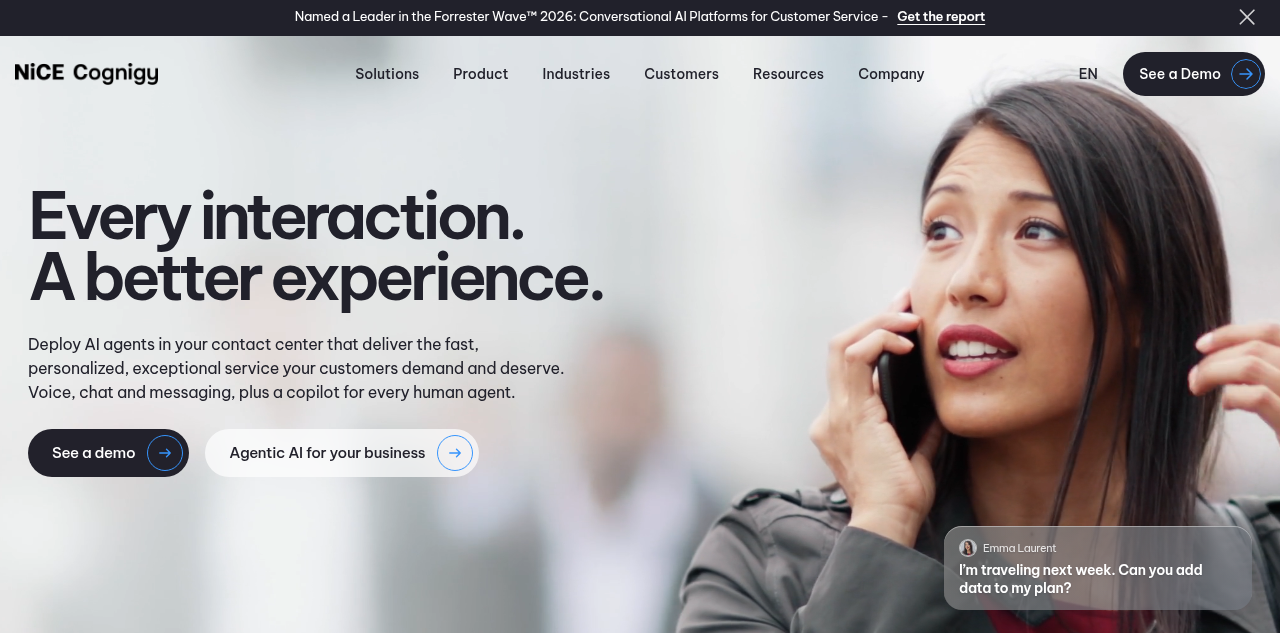
NiCE Cognigy website
Cognigy is a contact-center favorite. Gartner moved it from Leader to Visionary in 2026 and flagged the NiCE acquisition as a roadmap risk. Cognigy still reports a Leader placement in the 2026 Forrester Wave for Conversational AI Platforms for Customer Service.
By its own numbers, the platform offers 110-plus prebuilt integrations, two-way MCP, more than 100 languages and 2.6 billion-plus interactions a year, with capacity for 25,000 concurrent interactions. Customers named on the site include Lufthansa Group, with 16 million-plus automated conversations a year, Toyota, with 95% AI booking acceptance, and Salzburg AG, which says it saves 30,000 calls annually.
Best for: large contact centers that need multilingual coverage and deep integrations.
7. boost.ai
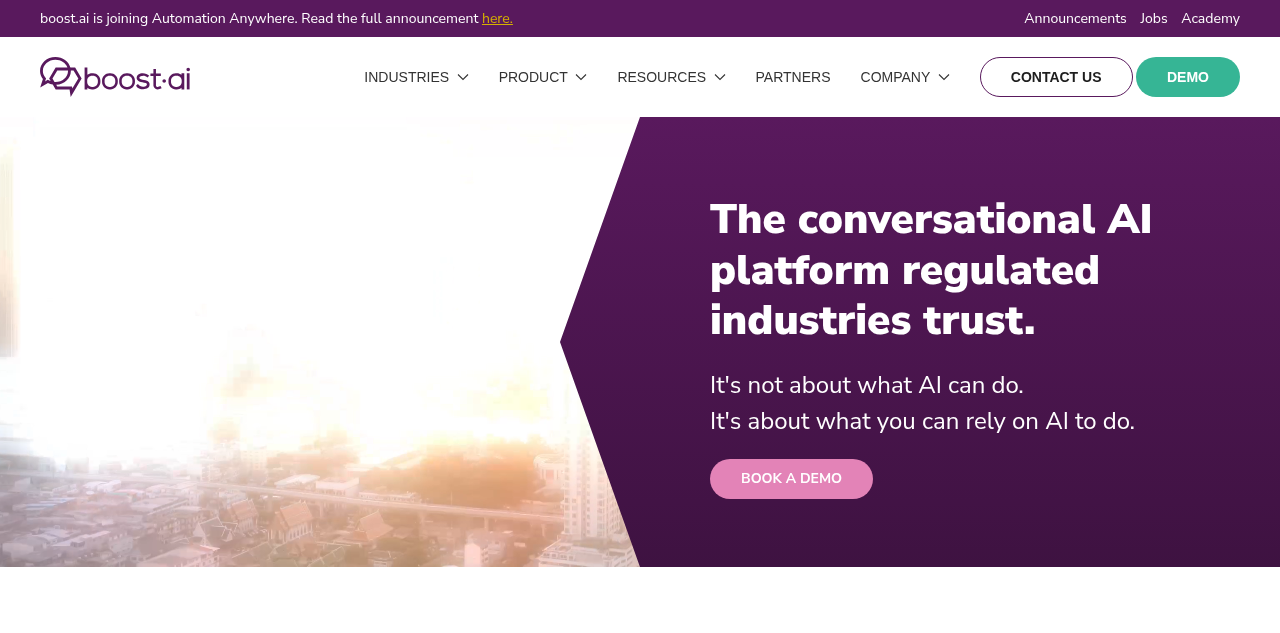
boost.ai website
Boost.ai focuses on regulated industries: financial services, insurance, telecom and the public sector. It handles chat and voice and uses a hybrid approach that blends established NLU with generative functions. Gartner moved it from Leader to Challenger this year, though CX Today notes strengths in professional services, fast activation and regulated-industry fit.
The customer list on its site includes Nordea, DNB, Telenor, Vodafone and Santander. It also shows 4.8 out of 5 ratings on Capterra and G2, which are the vendor’s own figures.
Best for: banks, insurers and telcos that want a vendor fluent in compliance.
How to pick from this list
Match the platform to your problem, not to the quadrant.
If you sell across many messaging apps and countries, Infobip’s channel reach is hard to match. If your data lives in Salesforce, Agentforce is the obvious starting point. If you’re a Google Cloud shop, Gemini Enterprise for Customer Experience slots in cleanly. Voice-heavy businesses should shortlist SoundHound. Regulated banks and insurers should look at boost.ai and Kore.ai. Large contact centers with many languages will want Cognigy on the list.
Then do the math on cost. One 2025 analysis from Azilen puts AI-handled interactions at roughly $0.10 to $0.50, against $5 to $12 for a human-handled ticket. A similar comparison in our article on how chatbots change customer communication puts those costs at $0.50 to $0.70 versus $6 to $15. The exact numbers vary, but the gap is large enough that even a partial deflection rate pays back.
Governance deserves a line in the budget too. The NIST AI Risk Management Framework gives a vendor-neutral way to structure questions about testing, monitoring and accountability before you sign anything.
Final thoughts
The 2026 quadrant rewarded scale and ecosystem. It didn’t tell you which platform fits a mid-sized retailer with customers on WhatsApp, or a regional bank with strict data rules. Only a pilot does that.
Run two or three platforms against the same set of real conversations, and score them on resolution, handoff quality and cost. For a more structured approach to testing, this AI agent selection framework covers how to evaluate agents using realistic tasks and measurable criteria.
Choosing the right platform is only part of the picture. Customers are also turning to AI assistants to research products and compare vendors. Understanding how these systems select and reference sources matters too, and AEOHub’s answer engine guide offers a closer look at that process. Your own content may play a role in how potential customers discover your business.
In the end, the best platform isn’t necessarily the one with the highest ranking or the longest feature list. It’s the one that handles your customers’ real needs, works with your existing systems and delivers results you can measure.