
The Invisible AI Infrastructure Powering Modern Smart Mobility
July 31, 2026 · 6 min read
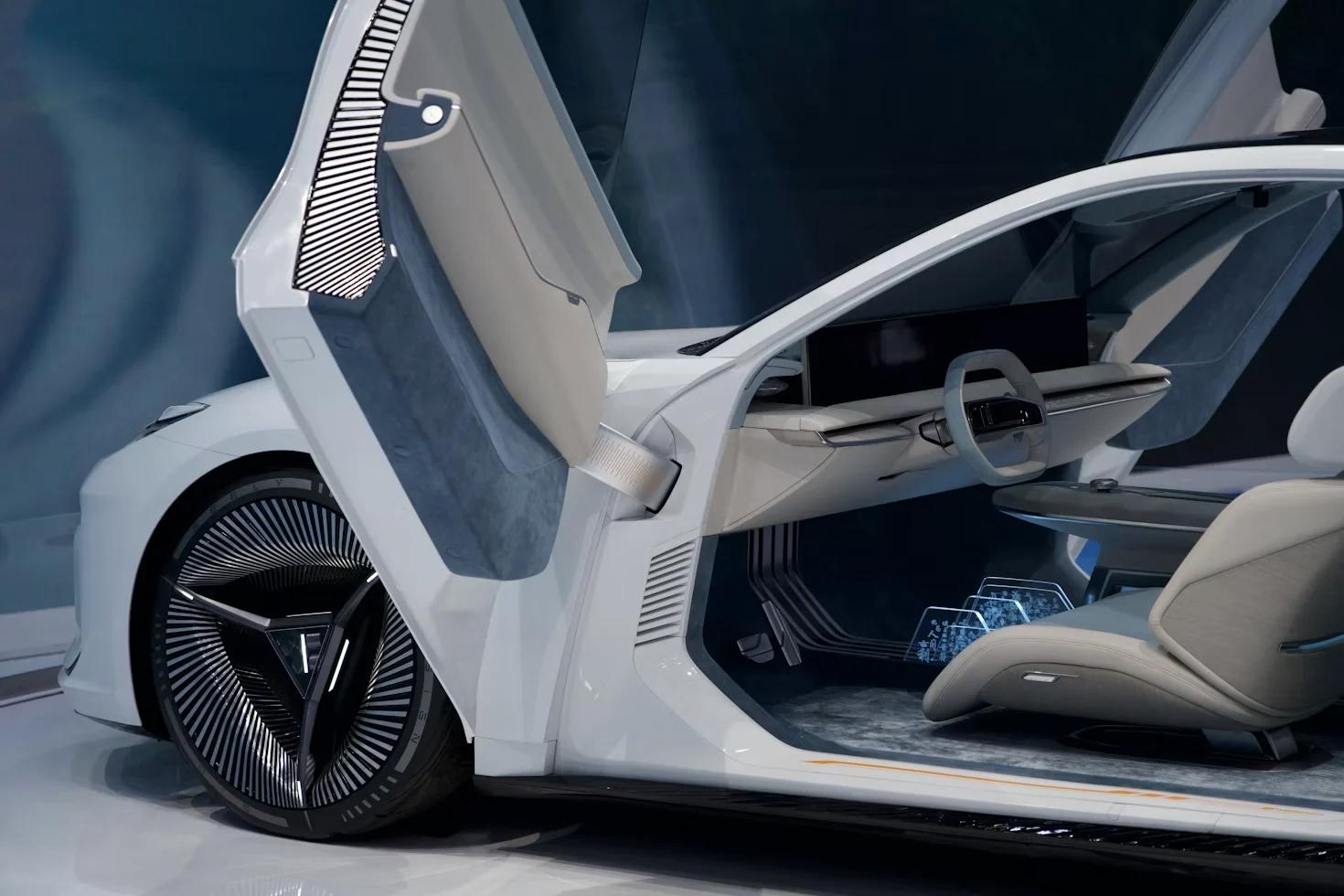
Smart mobility has quietly split into two industries. One is the flashy part — robotaxis, camera-covered prototypes, demo videos of a car parallel parking itself. The other is buried under the hood: data pipelines, edge processors, sensor calibration routines, none of which make headlines but all of which decide whether a vehicle actually works. This piece is about the second one — the plumbing, the latency budgets, the security holes nobody wants to talk about at a product launch.
The Part Nobody Photographs
Waymo runs roughly 200,000 paid rides a week across US cities. Apollo Go has passed 400 robotaxis operating in Wuhan alone. These numbers get repeated constantly, and for good reason — they're proof that autonomy left the lab. But behind every one of those rides sits a stack most people never think about: perception models processing sensor input in single-digit milliseconds, telemetry pipelines shipping terabytes back to fleet operators daily, and decision layers that have to be right basically all the time, not most of the time.
A recent DXC piece on artificial intelligence in self driving cars lays out the mechanics well: perception, decision-making, and control as three distinct AI functions stacked on top of each other, each with its own failure modes. Worth a read if the goal is understanding where software-defined vehicle architecture is actually headed, rather than where marketing decks say it's headed.
Well, here's the thing about latency in this domain — it isn't an abstract performance metric. A perception system running 150 milliseconds behind reality, at 60 mph, means the vehicle is reacting to a world that no longer exists by about 13 feet. That gap is the entire reason edge computing exists in automotive AI. Nobody's shipping raw LiDAR point clouds to a data center and waiting for a round trip.
What's Actually Being Tested Right Now
Forget the concept cars for a second. Here's what's live or close to it:
- Mercedes-Benz holds the current record for commercially approved Level 3 autonomy, cleared for 95 km/h operation in Germany, and is running Level 4 pilots in Beijing.
- Waymo and Waabi are training perception models on synthetic scenarios generated through GANs — rare edge cases like a deer bolting across a highway at dusk, simulated thousands of times over rather than waited for.
- NVIDIA's Omniverse and platforms like SaferDrive AI offer off-the-shelf simulation environments, letting teams stress-test planning algorithms against scenarios that would take years to collect from real driving.
- Cruise learned the hard way what happens when connectivity to a remote operations center drops mid-fleet — vehicles stalled in place, unable to resolve ambiguous situations without a human in the loop.
Sounds logical enough, right? Build a car, add sensors, train a model, ship it. Except the actual constraint isn't the model anymore. It's everything around the model.
Sensor Fusion: Where the Real Engineering Happens
Autonomous vehicles don't rely on one sensor type — they fuse several, because each one fails differently.
- LiDAR measures distance via laser reflection, excellent for precise 3D geometry, weak in heavy rain or fog.
- Radar uses radio waves, cheap and reliable in poor weather, but coarse on object classification.
- Cameras deliver rich semantic detail — lane markings, traffic lights, pedestrian posture — but degrade badly in low light or glare.
- Ultrasonics cover close-range blind spots, mainly for parking and low-speed maneuvers.
None of these alone gets a vehicle through a rainy night intersection safely. Sensor fusion architectures merge these streams — often using Kalman filters or learned fusion networks — into a single coherent world model the planning layer can act on. This is where a lot of the actual AI engineering effort in mobility goes, not in the flashy end-to-end neural nets everyone tweets about.
On the software side, ROS (Robot Operating System) and its successor ROS 2 remain the default middleware for stitching perception, planning, and control nodes together, especially in prototype and research fleets. It's not glamorous infrastructure. It's the nervous system.
How teams actually handle the data volume
AI in self-driving cars can generate terabytes of raw sensor data per vehicle, per day. Traditional CPUs choke on that volume, which is precisely why systems-on-chip like NVIDIA's Orin and Thor exist — purpose-built silicon that handles parallel AI workloads while managing thermal and power budgets a data center rack never has to worry about. A vehicle can't just add more cooling. Space and battery draw are fixed constraints, and that changes every architectural decision downstream.
How would a system architect handle this differently if power budget weren't a constraint? Probably by throwing more compute at every frame. Reality forces tradeoffs instead — which is honestly where the interesting engineering lives.
Edge Computing vs. the Cloud: Not Really a Choice
Centralized cloud processing sounds appealing on paper — more compute, easier updates, centralized monitoring. In practice, it's mostly unusable for real-time driving decisions. Round-trip latency to a data center, even on a strong connection, typically runs 50–100 milliseconds. Add network jitter, and safety-critical decisions can't tolerate that variance.
So the split looks roughly like this:
- On-vehicle edge compute handles perception, immediate obstacle avoidance, and control — anything with a hard real-time deadline.
- Cloud/data center processing handles fleet-level analytics, model retraining, HD map updates, and long-term telemetry analysis — things that can wait minutes or hours without anyone getting hurt.
Rural connectivity gaps make this split non-negotiable rather than optional. A vehicle relying on constant cloud connectivity in an area with spotty coverage isn't a self-driving car — it's a very expensive brick waiting for a signal bar.
V2X: The Layer Most People Forget About
Vehicle-to-everything communication — V2X — lets cars talk to traffic infrastructure, other vehicles, and pedestrians' devices directly, cutting down on the guesswork perception systems otherwise have to do alone. Picture an intersection where a traffic signal broadcasts its state directly to approaching vehicles instead of relying purely on camera-based light detection. That's a meaningful reliability gain in exactly the conditions — glare, occlusion, bad weather — where cameras struggle most.
V2X won't replace onboard perception. It supplements it, particularly in structured, well-instrumented urban environments. Rural highways without roadside units get none of that benefit, which is one more reason edge autonomy still has to stand on its own.
Software-Defined Vehicles: The Infrastructure Shift Underneath All of This
Here's a trend that gets less attention than it deserves: vehicles are turning into platforms that receive continuous software updates, the same way phones do. That shift — the software-defined vehicle model — changes what "infrastructure" even means for automotive AI teams.
It's no longer just about training a model once and deploying it. Teams now need:
- Continuous integration pipelines that can push validated model updates to fleets without bricking a car mid-update
- Telemetry systems capturing edge cases from real-world driving and routing them back into training loops
- Version control and rollback mechanisms for safety-critical software running physical hardware
- Security architecture that treats a vehicle less like a gadget and more like a distributed endpoint that happens to weigh two tons and move at highway speed
That last point matters more than most teams initially admit. A self-driving car is, functionally, a rolling data center with an attack surface — CAN bus vulnerabilities, over-the-air update pipelines, sensor spoofing risks. How does a team handle security when the "device" in question can be physically hijacked at 70 mph? That's not a theoretical question anymore; it's a design requirement.
Model Drift: The Quiet Failure Mode
One constraint doesn't get nearly enough coverage: models degrade over time. Relationships between input and output shift as road infrastructure, driver behavior, and even sensor hardware age and change. A perception model trained flawlessly in 2024 conditions isn't guaranteed to hold up in 2027 without retraining. That's a maintenance burden most consumer software teams never have to think about, and it's one autonomous systems teams live with permanently.
At least 25 fatalities in the US have been linked to incidents involving autonomous or partially autonomous systems — a sobering number that keeps this whole conversation grounded. Ambition in this space has to answer to reliability, every single time, not the other way around.
Where This Leaves Builders
For AI developers and system architects working anywhere near mobility, the takeaway isn't "build a better neural net." It's this: the infrastructure choices — where compute lives, how sensor fusion handles disagreement between sources, how telemetry loops feed retraining, how security gets baked in rather than bolted on — determine whether a system survives contact with the real world.
The flashy demo gets the funding round. The invisible infrastructure is what keeps the car on the road six months later, in the rain, with a spotty connection, and a pedestrian stepping off a curb at the wrong moment. That's the part actually worth architecting for.