
How to Deploy Autonomous Agents in Hotels
September 16, 2026 · 4 min read
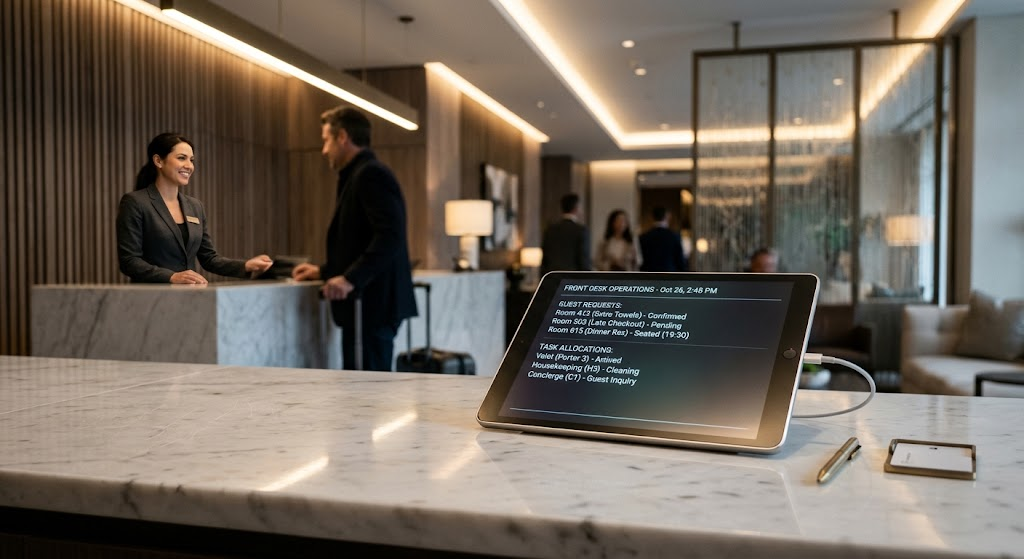 Image: Created with Nano Banana
There are nearly 7 out of every 10 North American hotels reporting severe front-line staffing shortages every year. Numerous operators are struggling to balance guest expectations with rising operational costs every single day.
While conventional automation could handle basic forms, autonomous agents execute complex multi-step tasks across systems without human hand-holding.
Moving from static software to intelligent agentic workflows is no longer a futuristic experiment for hotel brands. Deploying these digital workers requires a clear tactical framework that turns operational friction into automated precision across your entire property.
Identifying High-Impact Hospitality Workflows
Not every hotel task needs an autonomous agent. The key to immediate return on investment lies in identifying repetitive, rule-based workflows that consume hundreds of staff hours. Priority targets include managing late-night guest inquiries, verifying complex OTA reservation details, reconciling daily folios, and routing maintenance tickets across property departments.
Selecting the right foundational architecture makes or breaks your deployment. Agents require direct access to a central system of record with robust API connectivity to read state changes and trigger real-time actions. Modern properties rely on a streamlined hotel operations software framework to bridge the gap between front-desk tasks, back-office administration, and guest-facing channels.
When systems lack open access, agents stall out, and manual workarounds multiply. Start by mapping out processes where data flows cleanly between your guest databases and operational hubs.
Selecting Your AI Orchestration Stack
Building an effective agentic layer requires choosing the right balance between pre-built hospitality tools and custom frameworks. Off-the-shelf agents handle standard guest messaging quickly, but custom orchestration platforms let you tailor agent logic to your specific property rules.
Your stack must handle context retention, function calling, and fail-safe routing when an agent encounters an edge case. If an agent cannot resolve a guest request, it must pass the full context to a human team member instantly.
Establishing Secure Data Governance
Autonomous agents require access to sensitive guest records, payment channels, and internal operating systems to execute their assigned tasks effectively. Granting full system access without guardrails creates massive security risks that can compromise guest identity data or trigger unauthorized billing actions.
Data Access Scoping
Limit your agentic models to read-only access on core financial records while restricting write permissions strictly to specific API endpoints. Agents should only execute transactions within pre-approved thresholds to prevent unintended system updates.
Privacy Safeguards
Hotels must prioritize privacy and security when configuring model context windows to ensure personally identifiable information never leaves compliant local storage boundaries. Redact sensitive guest credentials before sending payload data to external models for processing.
System Audit Logging
Track every autonomous action inside a centralized database to ensure complete visibility over automated decisions. Detailed logs allow IT teams to review edge cases and continually refine agent boundaries over time.
Piloting Agents for Guest Messaging
Guest communication offers the most immediate win for hotel agent deployment. Unlike simple chatbots that match keywords, autonomous agents understand intent, access real-time inventory, and execute actions on behalf of the guest directly.
Pre-Arrival Coordination
Agents can automatically detect incoming flight delays, update estimated arrival times, and offer room upgrades via messaging channels without staff intervention. This reduces front-desk bottlenecks during peak check-in windows.
In-Stay Requests
When guests text for extra towels or late check-outs, agents parse the request, check system availability, and trigger the corresponding ticket in your property software. Guests receive instant confirmation while operations run smoothly in the background.
Automating Housekeeping Dispatch and Task Allocation
Housekeeping logistics demand constant real-time coordination across front desk updates, room readiness states, and physical staff locations on the floor. Autonomous agents streamline this operational maze by dynamically prioritizing room cleaning lists based on real-time guest arrivals, VIP status, and departure patterns.
Instead of managers spending hours assigning daily boards, agents evaluate priority logic continuously throughout the morning shift. When a guest checks out early at the front desk, the agent immediately re-routes the nearest available housekeeper via their mobile application.
This shift to dynamic routing slashes room turnover times significantly. Early arrivals get into their rooms faster, while housekeeping staff waste less time moving between floors or waiting on manual assignments.
Streamlining Night Audit and Financial Checks
The traditional night audit process involves tedious manual reviews, cross-referencing ledger balances, and hunting down posting discrepancies across multiple shift reports. Autonomous agents transform night audit workflows by running continuous reconciliation checks in the background while your team focuses on guest care.
Agents can audit daily room rates against active rate plans, catch missing billing codes, and compile end-of-day revenue reports automatically. When discrepancies arise, the agent highlights the exact transaction error for human review rather than forcing an auditor to scour hundreds of lines of ledger data.
Deploying agentic automation in back-office accounting slashes audit times from hours to minutes. Forward-thinking operators are leveraging agentic AI to handle complex financial reconciliations across multi-property portfolios effortlessly.
Change Management and Upskilling Hospitality Staff
Deploying autonomous agents requires a major shift in how hotel staff approach their daily responsibilities. Employees often view automation as a threat to job security rather than a tool designed to eliminate manual toil.
To change that, operators can do several things:
- Frame agentic tools as digital assistants that handle tedious data entry so staff can focus on high-touch guest service
- Involve department heads early when mapping agent workflows to ensure system logic aligns with actual floor operations
- Establish clear escalation protocols so team members know exactly how and when to take over from an agent
Successful change management relies on turning staff into AI supervisors who guide model decisions. Teams that embrace this shift see significant improvements in job satisfaction as administrative friction disappears. Industry data highlighting major AI trends in hospitality points toward hybrid workforce models where human hospitality professionals manage intelligent automation.
Building Your Scalable Hospitality Framework
Autonomous agents are transforming hotel management by turning manual operations into continuous, automated intelligence across every department. Success requires starting with focused workflows, establishing strict data governance, and maintaining a modern property software foundation.
As your digital workers take on routine tasks, your human teams gain the freedom to focus on exceptional service. Measure your agent performance metrics regularly and expand their responsibilities as system trust builds over time.
If this article was helpful, check out the blog for more practical tips on agentic frameworks and hotel technology.