
How Real Estate Agents Use AI and WhatsApp Automation for Lead Follow Ups
September 28, 2026 · 9 min read
Real estate leads do not usually disappear all at once.
They cool down.
Someone asks about a listing, gets the details, and then spends the next few days comparing other properties. Another prospect likes the apartment but cannot make the available viewing time. Someone else is interested, but the budget is slightly wrong.
This creates a peculiar kind of sales pipeline. Many leads are neither active nor truly lost. They are simply waiting for the right reason to continue.
That is where WhatsApp follow-up becomes more useful when combined with structured automation and AI-assisted lead management.
Instead of treating every inquiry as an identical conversation, agents can use information from previous messages to qualify leads, identify the right follow-up trigger, summarize customer preferences, and decide which conversations deserve immediate attention.
The goal is not to automate every interaction.
It is to automate repetitive work while helping agents make better decisions about when and why to follow up.
The First Inquiry Can Become a Structured Lead Profile
Property inquiries often start with very little information.
Is this still available?
What is the rent?
Can I view it this weekend?
These are useful openings, but they do not tell the agent much about the prospect.
A short conversation can uncover far more: preferred location, budget, move-in timing, property type, parking requirements, whether pets are allowed, or how flexible the customer is about the neighborhood.
Traditionally, agents have to remember these details themselves or manually enter them into a CRM.
AI-assisted lead management can make that process more structured.
For example, an AI system can review a conversation and extract information such as:
- preferred location;
- budget range;
- number of bedrooms;
- move-in date;
- viewing availability;
- important requirements;
- level of purchase or rental intent.
The agent can then review the extracted information before using it for future follow-ups.
Those details remain useful even if the original listing disappears.
If someone asked about a two-bedroom apartment that was rented the next day, the inquiry does not automatically become worthless. If the agent knows the customer still wants two bedrooms in the same area within a similar budget, another listing may be enough to reopen the conversation.
The property may have disappeared.
The demand has not.
AI-Assisted Lead Qualification Helps Agents Decide Who to Follow Up With First
Not every inquiry deserves the same level of attention.
One prospect may simply be checking the market. Another may have already shared a budget, preferred neighborhood, move-in date, and request for a viewing.
Those conversations have different levels of intent.
AI-assisted lead qualification can help identify those differences by analyzing the information already available in the conversation.
A lead might be categorized as:
High intent: requested a viewing, confirmed budget, and has a clear move-in timeline.
Medium intent: has defined requirements but has not committed to a viewing.
Low intent: asked a general question but provided little additional information.
The purpose of this classification is not to let AI decide whether someone is a good customer.
It gives the agent a more manageable queue.
Instead of manually reviewing dozens of conversations to decide what to work on next, the agent can focus first on leads showing stronger buying or rental signals while keeping less active leads available for future re-engagement.
Follow-Up Works Better When Automation Has a Real Trigger
Generic messages are easy to send:
Just checking if you’re still interested.
The problem is that nothing in the message gives the prospect a reason to answer.
Property markets provide better follow-up triggers naturally.
A price has dropped. Another viewing time is available. The owner has answered a question. A similar unit has just been listed. Weekend appointments have opened.
These events can become part of an automated follow-up workflow. Voice AI agents such as mergro call a new lead within 60 seconds, qualify them and book the viewing, then hand off to WhatsApp follow-up.
For example:
Trigger: New viewing slots are added.
Condition: Lead previously asked to view the property but could not attend.
Action: Prepare a follow-up message with the new available times.
The message might be:
Hi Daniel, the apartment you asked about is still available, and the owner has opened two more viewing slots on Saturday. Would either work for you?
The prospect is not being contacted simply because three days have passed.
There is new information worth considering.
Good automation should react to meaningful changes rather than repeatedly sending reminders because a timer expired.
AI Can Help Restore the Context of Older Conversations
Agents spend all day thinking about their own listings.
Buyers do not.
Someone searching seriously may have contacted five agents, saved a dozen properties, and viewed several homes within the same week.
A message saying:
The property is still available.
may force the customer to figure out which property the agent means.
A little context solves that:
The two-bedroom apartment near Central Station that you asked about on Monday is still available.
AI can also help the agent recover that context before sending the message.
Instead of rereading a long WhatsApp conversation, an AI-generated summary might show:
Property: Two-bedroom apartment near Central Station Budget: Up to $2,300 Main concern: Saturday viewing required Previous status: Interested but unavailable for weekday appointment Suggested next step: Offer new weekend viewing slot
The agent still decides what to send, but the time spent reconstructing the conversation is reduced.
This becomes increasingly valuable when an agent is managing dozens or hundreds of active chats.
A Viewing Should Feed the Next Recommendation
Agents often put most of their attention into getting someone to the viewing.
Once the viewing happens, the conversation can become surprisingly vague.
What did you think?
It is polite, but it may not reveal much.
More specific questions usually produce more useful information:
Did the second bedroom feel too small?
Was the commute the main concern?
Would this property work if the price were slightly lower?
The answer may show that the customer is not rejecting the entire search. They may simply be rejecting one feature of one property.
This information can also feed an AI-assisted property matching workflow.
Suppose the agent records that:
- the kitchen was too small;
- parking is essential;
- the neighborhood was acceptable;
- the budget remains unchanged.
The next time a suitable property enters the inventory, those preferences can help identify which leads may be worth contacting.
A failed viewing can therefore improve the next match.
Automate Repetitive Viewing Messages, Not the Entire Conversation
Property agents send many messages that change very little from one customer to another.
Viewing confirmations are a good example.
The core information is usually predictable: property, date, time, address, and perhaps the name of the person meeting the prospect.
There is little benefit in rewriting the structure every time.
A simple workflow can standardize these messages while inserting the relevant customer and property details.
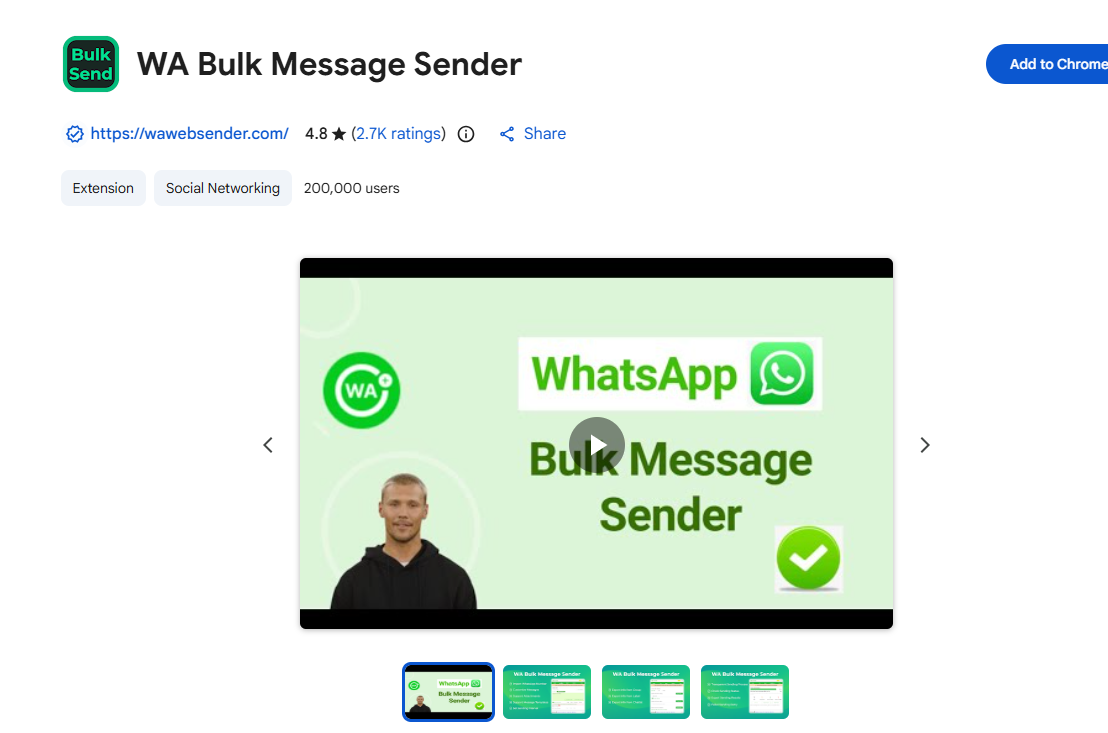
For agents working primarily from the desktop, WhatsApp Web Sender can fit into WhatsApp Web workflows where contact handling and repeat messaging already form part of everyday lead management.
The useful part is not turning every exchange into a template.
It is removing repetition from predictable communication so the agent can spend more attention on qualification, objections, property matching, and negotiation.
AI can support that process by helping draft or personalize the message, while the operational workflow handles the repeated sending task.
No-Shows Need a Different Automated Workflow
A missed viewing does not always mean the prospect has lost interest.
Schedules change. People forget. Buyers may be viewing several properties on the same day.
That means a no-show should not automatically receive the same follow-up as someone who attended a viewing or someone who never booked one.
A workflow might look like this:
Viewing booked → Customer attends → Ask for property feedback
Viewing booked → Customer does not attend → Offer a new appointment
Second no-show → Reduce lead priority or request confirmation before reserving another slot
The first message after a no-show does not need to sound confrontational.
Hi Emma, I noticed we missed you for the viewing this afternoon. If your plans changed, I can check whether another time is available.
This gives the prospect an easy way back into the conversation.
Repeated no-shows are different.
At some point, the agent needs to decide whether continuing to reserve time for the lead makes sense.
Automation can identify the pattern, but the agent should still decide how aggressively the lead is pursued.
Follow-up should help qualify commitment, not keep every conversation alive indefinitely.
Old Leads Become More Valuable When AI Can Match Them With New Inventory
One of the strongest reasons to maintain structured lead data is that property inventory changes constantly.
A customer may reject everything available today and still become an excellent prospect next month.
That is especially true when the agent knows why previous options did not work.
Suppose someone wanted:
two bedrooms;
a balcony;
a particular school district;
maximum rent of $2,200.
Nothing available in March may fit.
When something suitable appears in April, an AI-assisted matching process can compare the new listing against stored lead preferences and identify previous prospects who may now be relevant.
The follow-up practically writes itself:
Hi Laura, a new two-bedroom property just came up in the area you were looking at. It has the balcony you wanted and is within your original budget. Want me to send the details?
That is very different from sending another generic property advertisement.
The agent is reconnecting because the inventory now matches known demand.
High Inquiry Volume Changes What Needs to Be Automated
One attractive listing can generate a large number of inquiries.
New developments, rental launches, open houses, and price reductions can generate even more.
At that point, the problem is no longer writing one good follow-up.
It is managing repeated work across dozens of similar conversations.
Many prospects may need the same type of update:
viewing availability has changed;
another unit has opened;
the asking price has been reduced;
a property has been taken;
a similar listing is now available.
AI can help identify which leads should receive which update, while a structured messaging workflow handles the repeated operational work.
For example, instead of messaging every historical lead, the agent might filter for people who:
- previously asked about the property;
- have a compatible budget;
- have not already rented or purchased elsewhere;
- have interacted within a relevant period.
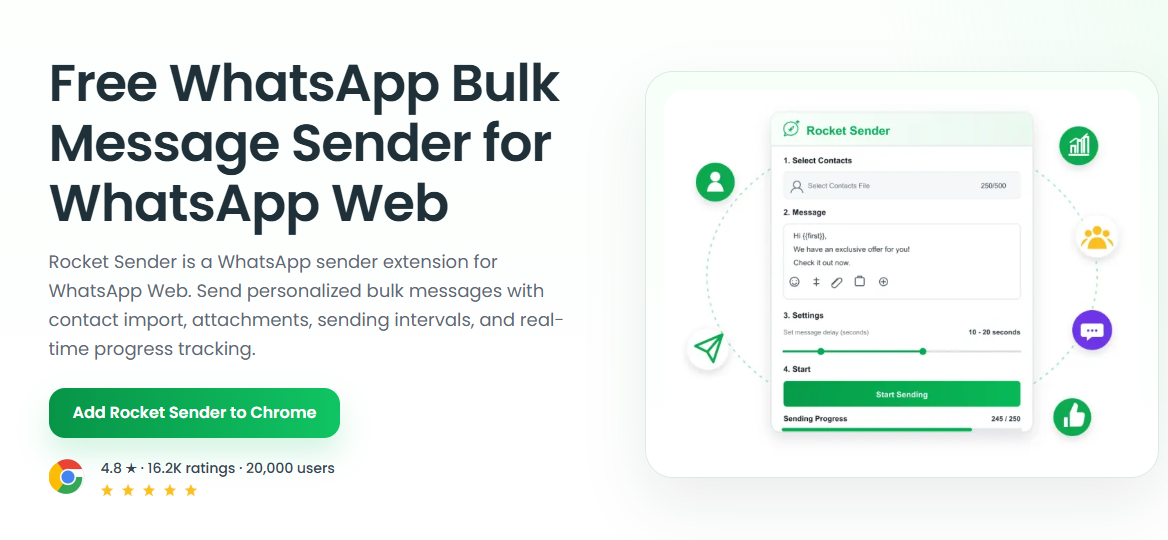
WhatsApp Sender can support more structured WhatsApp Web workflows involving contact lists, personalized message fields, sending controls, and progress tracking when this kind of repetition becomes difficult to manage manually.
The combination is more useful than either system alone.
AI helps determine relevance.
The messaging workflow helps execute repeated communication.
The agent remains responsible for the conversations that require judgment.
AI Conversation Summaries Can Reduce Lead Management Overhead
Lead management becomes difficult when information is buried across long message histories.
One customer may have changed their budget twice.
Another may have originally wanted one neighborhood but later expanded the search.
Someone else may have postponed their move by three months.
AI-generated conversation summaries can turn those histories into shorter working notes.
A useful summary might contain:
Current requirement: Two-bedroom rental Preferred areas: Downtown or Riverside Budget: Up to $2,500 Move-in target: November Key concern: Parking required Last interaction: Viewed Property A but rejected it because parking was unavailable Possible next action: Contact when a matching property becomes available
This allows the agent to understand the current state of the lead without reviewing every previous message.
It also makes automated follow-up more reliable because the workflow can use current customer requirements rather than only the information from the first inquiry.
Not Every Lead Should Stay in the Active Pipeline
Good automation also means knowing when not to send another message.
If someone has ignored several attempts and nothing has changed, another check-in may not add much.
Keeping every historical inquiry active creates its own problem. Agents spend time revisiting conversations that have little current value while more promising leads compete for attention.
AI-assisted lead management can help separate:
active leads;
leads waiting for a specific property match;
leads that need a later follow-up;
and conversations that no longer require active attention.
Older leads become worth reopening when there is a concrete reason:
a matching listing;
a price change;
new availability;
different viewing times;
an answer to a previous question.
Without that trigger, silence can be more appropriate than another automated reminder.
Useful Automation Should Make the Search More Specific
The quality of a real estate lead should improve as the conversation continues.
After several exchanges, the agent should ideally know more than they did after the first inquiry.
Perhaps the buyer’s budget is more flexible than expected.
Maybe a renter cares much more about commute time than apartment size.
Someone who originally asked for three bedrooms may accept two if the location is right.
AI can help organize those changing preferences, but the value still comes from what the agent does with them.
That is why follow-up should not be measured by how many messages were sent or how many steps were automated.
A useful workflow produces information, commitment, or a clearer next step.
Sometimes that means a viewing.
Sometimes it means discovering that the property is wrong but another type of property could work.
Sometimes it means learning that the customer has stopped searching entirely.
All three outcomes are more valuable than leaving the lead permanently in an uncertain state.
WhatsApp Automation Works Best When AI Supports the Agent Rather Than Replacing Them
Real estate sales rarely move in a straight line.
Listings disappear. Customers change criteria. Budgets move. Viewings are rescheduled. A property that looked promising online may not work in person.
WhatsApp works well as the communication layer because it can maintain continuity across those changes.
Automation can handle predictable operational work.
AI can help extract preferences, summarize conversations, qualify leads, and identify relevant follow-up opportunities.
The agent still handles the parts that require human judgment: negotiation, objections, property advice, relationship building, and final decisions about how to approach a customer.
The strongest workflow is therefore not one where AI sends as many messages as possible.
It is one where AI and automation reduce the repetitive work surrounding each conversation so the agent knows when there is something genuinely worth bringing back to the customer.
A better viewing time.
A newly available unit.
A property closer to the buyer’s budget.
An answer that removes a previous objection.
A new listing that matches requirements discussed weeks earlier.
When follow-up works this way, WhatsApp stops feeling like a reminder channel and becomes part of a more intelligent lead-management and property-matching process.