
From Text to Cinematic Reality: Hands On with the Next Generation of AI Video Engines Seedance 2.5
September 28, 2026 · 5 min read
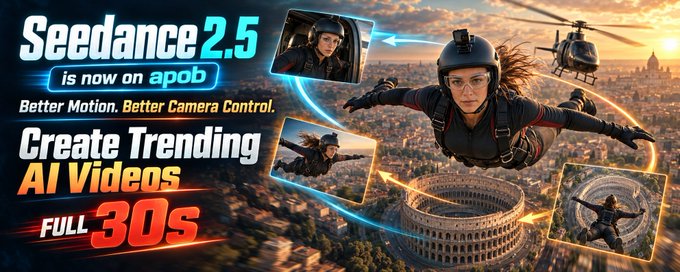
If you follow the consumer tech space closely, you know that AI video generation moves at a terrifying speed. Just a short time ago, we were laughing at AI-generated videos of people eating spaghetti—nightmarish clips where fingers melted into forks and physics simply didn't exist. Fast forward to today, and the conversation has completely changed. We are no longer talking about whether AI can generate a decent video; we are talking about whether it can replace a camera crew altogether.
The engine currently dominating this conversation across tech forums and creator communities is Seedance 2.5.
While there is a gold rush of developers trying to build the ultimate video generation model, Seedance 2.5 has quietly established itself as the new industry standard. Major tech reviewers and platforms have spent the last few weeks putting this model through rigorous stress tests, and the consensus is clear: it represents a massive leap forward in how artificial intelligence understands space, time, and physics.
But with several platforms now hosting this powerful engine, how do you actually get your hands on it without draining your wallet? To answer that, we need to look at why this model matters, how it destroys the current crop of "free" alternatives, and why platforms like APOB are becoming the go-to hubs for indie creators to access it.
The Problem with "Free" AI Models: The Minimax H3 Trap
To appreciate what Seedance 2.5 achieves, we first have to talk about the current landscape of accessible video models. Right now, a lot of creators are turning to completely free alternatives, with Minimax H3 being one of the most popular options on the market.
On paper, a free AI video model sounds incredible. And for absolute beginners who just want to generate a quick meme or experiment with text prompts, Minimax H3 does the job. But if you are a creator, marketer, or filmmaker trying to produce something usable for a serious project, the cracks in the Minimax foundation show up almost immediately.
The biggest issue with Minimax H3 is a glaring lack of spatial consistency, which results in what gamers call "clipping." You prompt the AI for a simple scene—a person walking through a doorway or holding a cup of coffee. Halfway through the generated clip, the subject’s arm phases directly through a solid wooden table, or their background suddenly morphs into an unrecognizable blob of pixels.
These visual bugs and structural collapses happen because older or lighter models do not actually understand 3D geometry; they are essentially just guessing what the next frame should look like based on 2D pixel patterns. As a result, you have to generate the same prompt dozens of times just to get three seconds of usable, bug-free footage. That is not a workflow; that is a slot machine.
The Seedance 2.5 Breakthrough: Physics, Consistency, and the 30-Second Rule
This is exactly where Seedance 2.5 completely rewrites the playbook. Built on a vastly improved architectural framework, this model doesn't just paint pixels—it seemingly understands the physical rules of the scene it is generating.
1. The 30-Second Generation Milestone
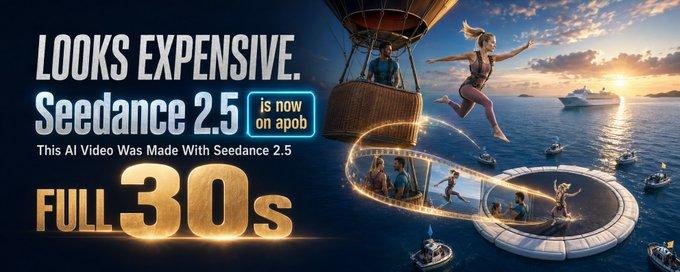
For a long time, the hard limit for high-quality AI video creation was about 4 to 5 seconds. If you tried to push it further, the AI would "forget" what the subject looked like, resulting in the character aging rapidly, changing clothes, or turning into a completely different person by the end of the clip. Seedance 2.5 shatters this limitation by allowing users to generate smooth, continuous 30-second videos in a single shot. For filmmakers and content creators, this is revolutionary. Thirty seconds is a complete commercial, a full TikTok loop, or an entire scene in a short film, all rendered in one cohesive take.
2. Zero Clipping and Natural Movement
Remember the clipping issues we mentioned with Minimax H3? Seedance 2.5 practically eliminates them. Because the model maintains a strict internal logic of where objects are in a 3D space, characters interact with their environments naturally. If a character leans against a wall in Seedance 2.5, they actually lean against it—they don't sink into the concrete. The micro-movements, like the way hair reacts to wind or the way shadows shift as a person walks across a room, look incredibly natural. It completely avoids the robotic, uncanny-valley stiffness that plagues earlier AI generators.
3. Validated by the Tech Community
You don't have to take our word for it. Over the past month, major tech reviewers across YouTube and various AI benchmarking platforms have heavily tested Seedance 2.5. They threw complex prompts at it—multiple characters in a scene, dynamic camera movements (like drone swoops and tracking shots), and complex lighting scenarios. Across the board, the model held up, maintaining strict character consistency and flawless geometry even during high-motion sequences.

Why APOB is the Best Way to Experience Seedance 2.5
Because Seedance 2.5 is a foundational model, it isn't restricted to a single website. Many different AI platforms and software suites are currently integrating this engine into their backend. However, accessing high-end AI computing power is traditionally very expensive. Running a model that can process 30 seconds of flawless, cinematic video requires massive server-side GPU resources, and most platforms pass that cost directly onto the user through high subscription fees or expensive credit systems.
This brings us to APOB.
APOB is one of the platforms currently utilizing the Seedance 2.5 model, but it has quickly become the favorite among savvy creators for one highly practical reason: unbeatable cost-effectiveness.
While other platforms gatekeep Seedance 2.5 behind premium enterprise tiers, APOB has structured its pricing model to be radically more affordable for the everyday creator. They give you direct access to the exact same cutting-edge Seedance 2.5 engine—meaning you get the exact same 30-second continuous generation, the exact same stunning character consistency, and the exact same bug-free physics—but at a fraction of the cost you would pay on competing platforms.
For creators who rely on trial and error to get the perfect shot, pricing is everything. When a platform charges exorbitant fees per generation, it forces you to compromise on your creative vision because you are too afraid to waste credits. APOB’s pricing structure removes that friction. It allows you to experiment, tweak your prompts, and push the Seedance 2.5 engine to its absolute limits without worrying about burning through your monthly budget in an afternoon.
Furthermore, APOB doesn't just hand you the raw engine and leave you to figure it out. They have built an incredibly intuitive, creator-focused user interface around the Seedance 2.5 model. It is designed specifically for people who want to produce content, whether that means generating consistent digital influencers, creating cinematic music videos, or launching interactive AI live streams.
The Bottom Line
We are officially past the novelty phase of AI video. We are no longer dealing with quirky tech demos that generate glitchy, five-second clips. The arrival of the Seedance 2.5 model proves that AI is now a highly capable, reliable engine for serious visual storytelling. It has solved the clipping bugs, mastered character consistency, and unlocked the holy grail of 30-second continuous generation.
While free tools like Minimax H3 will always have a place for casual users making memes, anyone looking to produce professional-grade content needs to upgrade to the latest generation of tech.
By integrating this powerhouse model and offering it at a highly competitive, creator-friendly price point, APOB has essentially democratized high-end video production. You no longer need to rent a studio, hire a camera crew, or buy a $3,000 graphics card to bring your ideas to life. Ultimately, APOB is not just a tool; it is a cloud-based Hollywood studio on a creator's desktop.