
Why Status Update Meetings Are a Waste of Your Team's Time
March 10, 2026 · 7 min read
We need to stop pretending that "syncing up" is the same thing as actually working. In most offices, the status update meeting is a weekly or even daily ritual where people sit in a circle and recite things that could have been read in thirty seconds. It's expensive, it's draining, and frankly, it's a sign of a broken system. If you have to call a meeting just to find out what your team is doing, it means your current software is failing you.
The reality is that meetings should be for solving complex problems, brainstorming the next big thing, or building human connections. They should not be for reporting. When you move your team into dedicated project management tools, the "what are you working on?" The question is already answered by the workspace itself. You get back hours of your week because the status of every project is visible in real-time, allowing everyone to focus on execution rather than performance art.
The transparency gap and visibility without interrogation in Lark Base
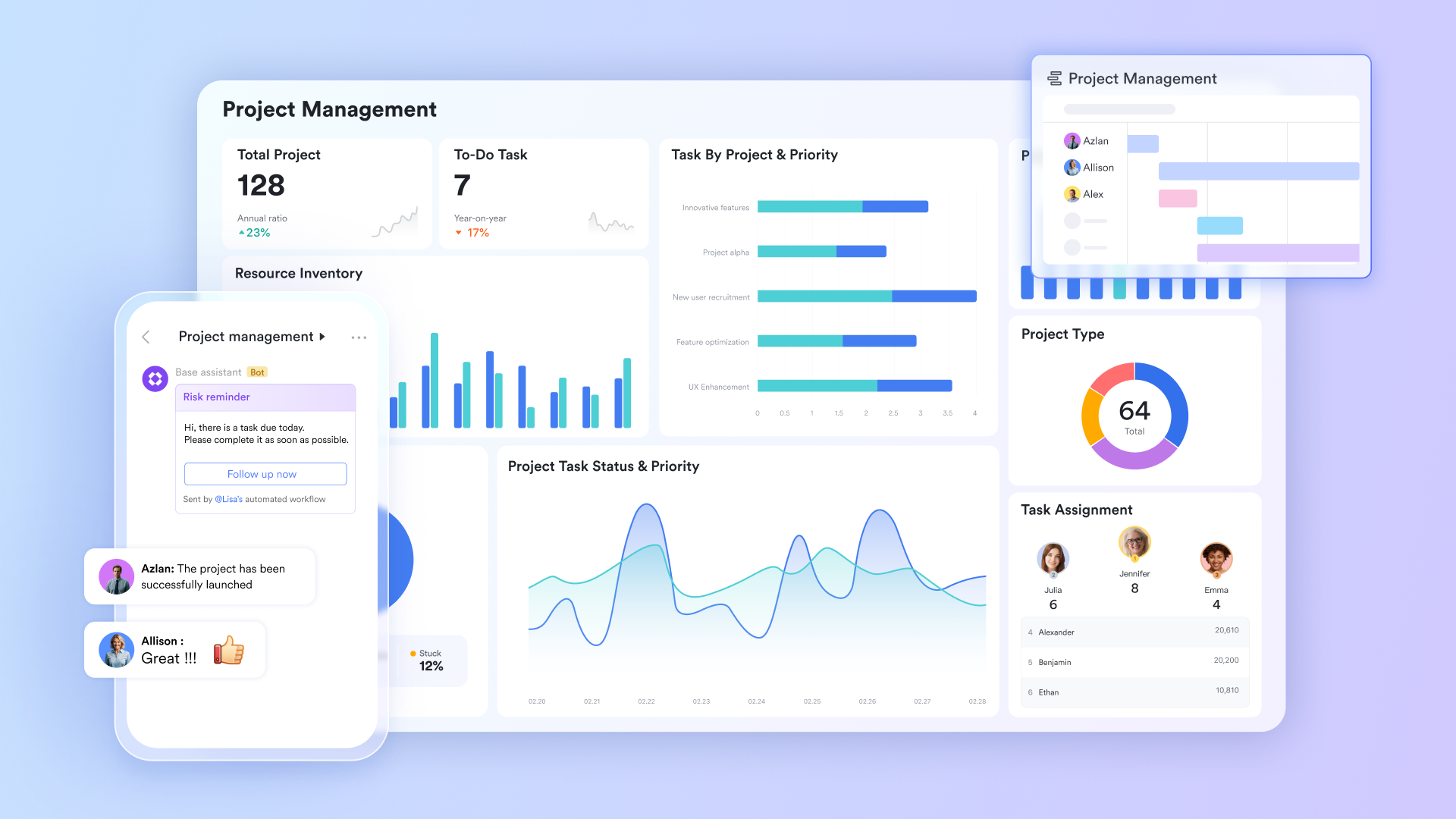
The biggest reason these status meetings exist is a fundamental lack of transparency. Most managers feel "blind." They don't know who is overwhelmed, who is waiting for feedback, or which project is about to hit a wall. To fix this blindness, they force everyone to hop on a call and explain themselves. It's an interrogation disguised as collaboration. But when you use Lark Base, that visibility is built into the foundation of the work.
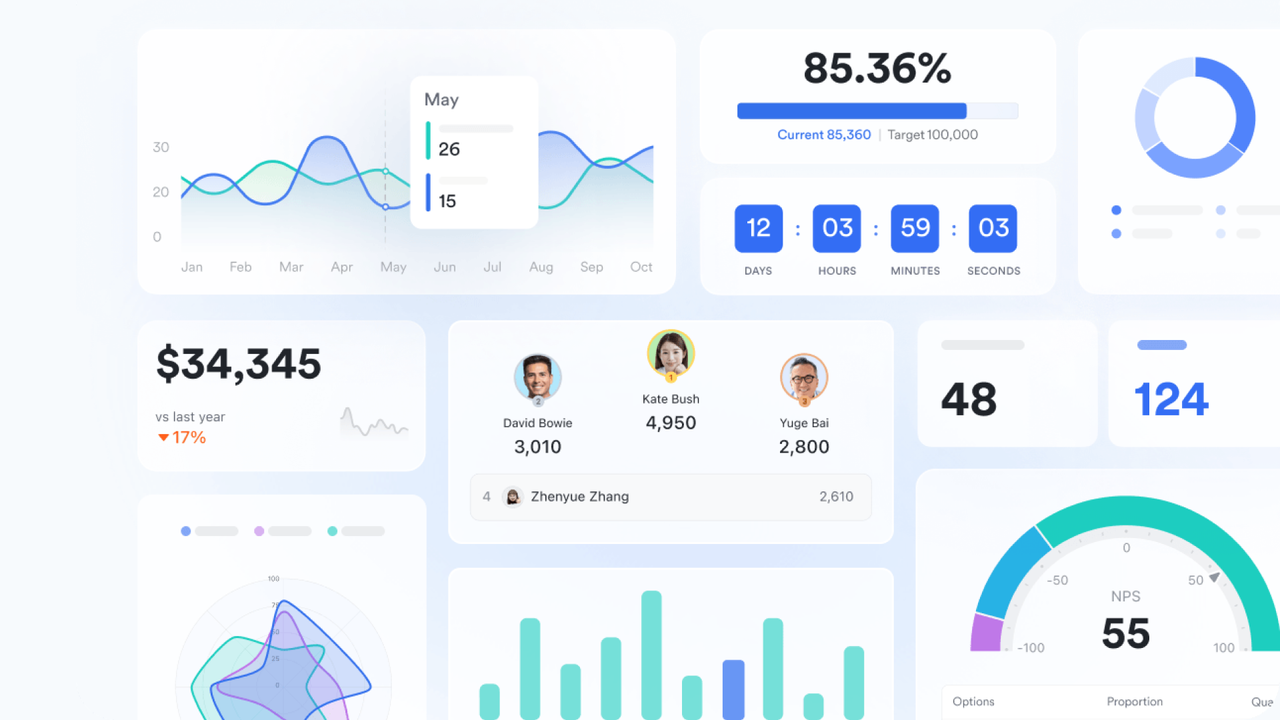
Instead of a static list of tasks hidden in a private file, you have a multi-dimensional dashboard that updates as people work. You can see which projects are on track and which ones are hitting a wall without ever asking for a "verbal update." This level of insight is where you really see the gap in tools today. Most apps require manual checks and constant "updates" just to reflect reality. In a unified hub, the work is the update. Because your database is natively connected to your messenger, you can get an automated ping the moment a high-priority task moves into "Review." It turns the manager from a nag into a facilitator who only steps in when there is an actual roadblock to clear.
Reclaiming the calendar and zero-effort scheduling with Lark Calendar
Most status meetings are born from the chaos of not knowing who is doing what or when they are available. We hold meetings to "align schedules," which is perhaps the most circular waste of time in the modern world. Lark Calendar eliminates that by making everyone's availability, local time zones, and commitments transparent. You don't need a meeting to see if a team is over-capacity or when a milestone is approaching; the data is layered right over your workspace.
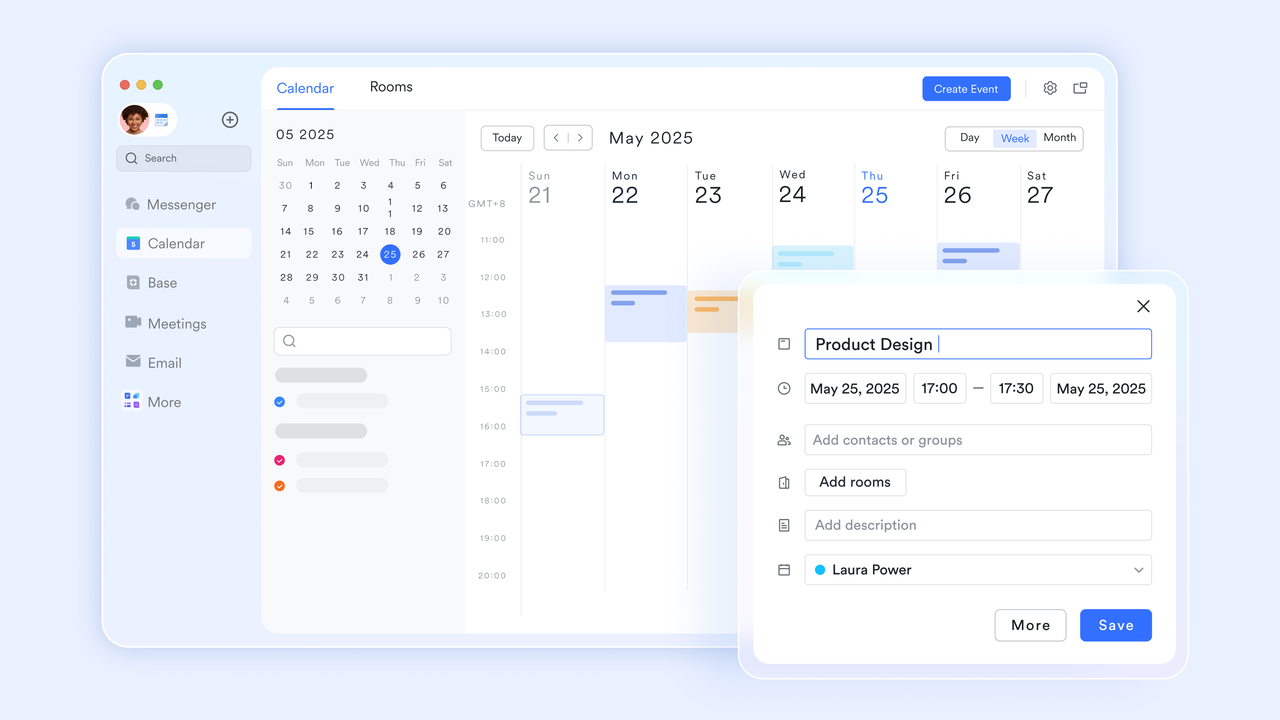
When you compare this to the fragmented experience often found when evaluating Google Workspace pricing, you see the value of a calendar that isn't just an app, but a coordination engine. You can see the "busy" status or the current "In a Meeting" tag of a colleague directly in the Messenger sidebar. This prevents the need for that dreaded "quick sync" just to check if someone has the bandwidth for a new task. It allows for a culture of respect for deep work. If I can see you're in a flow state or nearing a deadline, I don't need to call a meeting to ask for your time; I can see the reality of your day and adjust accordingly.
Defining accountability with Lark Tasks
A huge chunk of every meeting is spent in a cycle of "Who is taking care of this?" and "When will it be done?" This is usually followed by someone frantically taking notes that half the team will never read. Lark Tasks handles this by embedding the to-do list directly into the communication flow. You can turn a chat message or a comment in a document into a trackable task in two clicks. Everyone involved can see the owner, the deadline, and the progress in real-time.
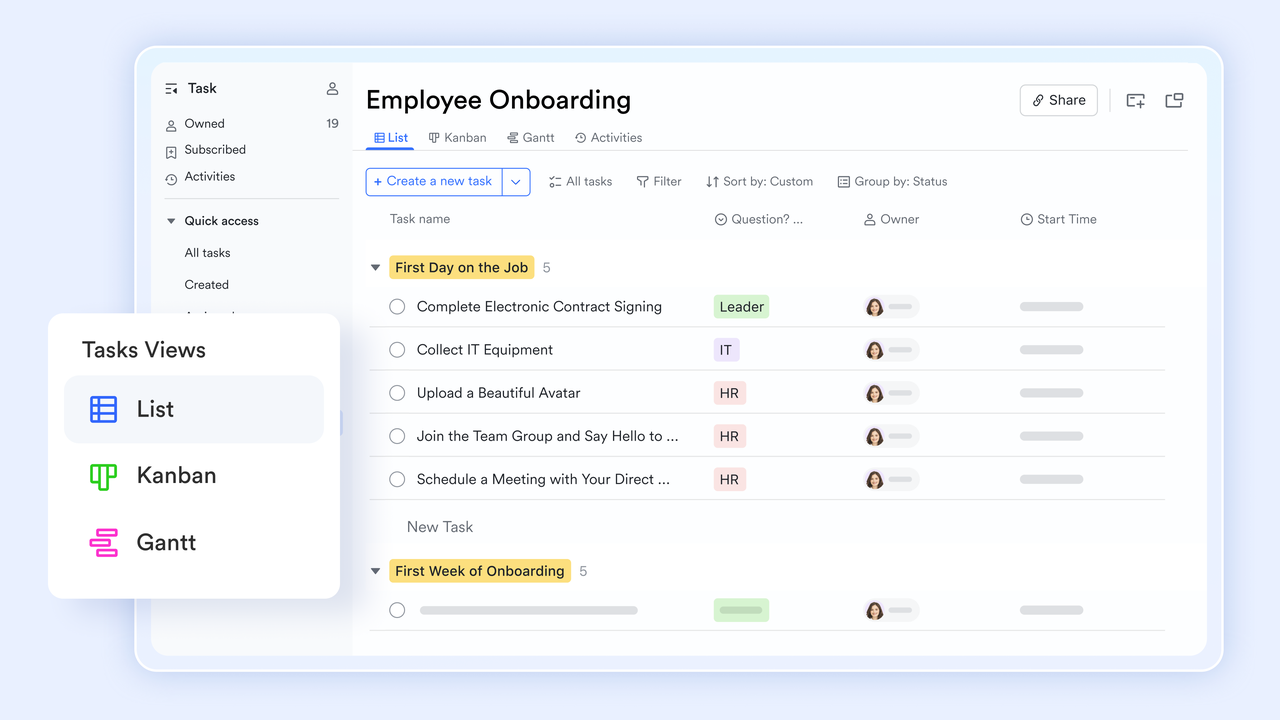
It turns the "check-in" into a passive, background process. If a task is overdue, the system notifies the owner and the manager automatically. You don't need a 30-minute call to find out a deadline was missed; you spend that time actually helping the team finish the work. This is the shift from "watching the clock" to "watching the results." It removes the ambiguity that leads to meeting-bloat and replaces it with a clear, shared record of responsibility that stakeholders can see.
Removing the sign-off bottleneck with Lark Approval
Sometimes meetings happen just because a manager needs to "bless" a decision before the team can move forward. These are often the shortest but most disruptive meetings. A team waits for three days for a 5-minute "go-ahead." Lark Approval moves these sign-offs into the Messenger thread where the conversation is already happening. Whether it's a budget request, a contract review, or a holiday leave, the request appears as an actionable notification.
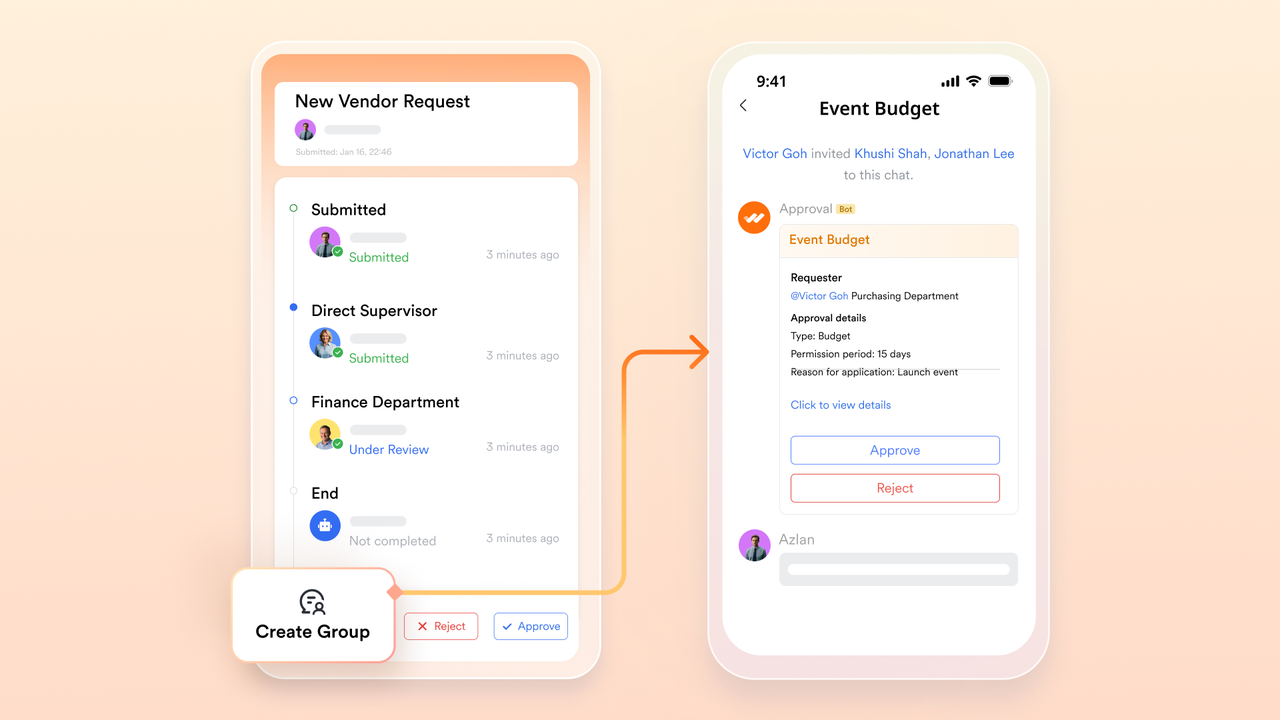
You see the details, you hit "Approve," and the project keeps moving. This is one of the productivity tools that actually speeds up the business by removing the "waiting for a meeting" lag. It creates an audit trail that is searchable and transparent, meaning you never have to hold a meeting to ask, "Who authorized this spend?" The history is attached to the work, not buried in someone's old email folder.
Strategic clarity and the end of the "why" meeting through Lark OKR
We often meet just to ensure everyone is still pulling in the same direction—the "alignment" meeting. Lark OKR makes this alignment visible every single day. Instead of a hidden spreadsheet or a slide deck that only comes out once a quarter, your goals are woven into the interface. Every team member can see how their specific tasks contribute to the company's high-level objectives.
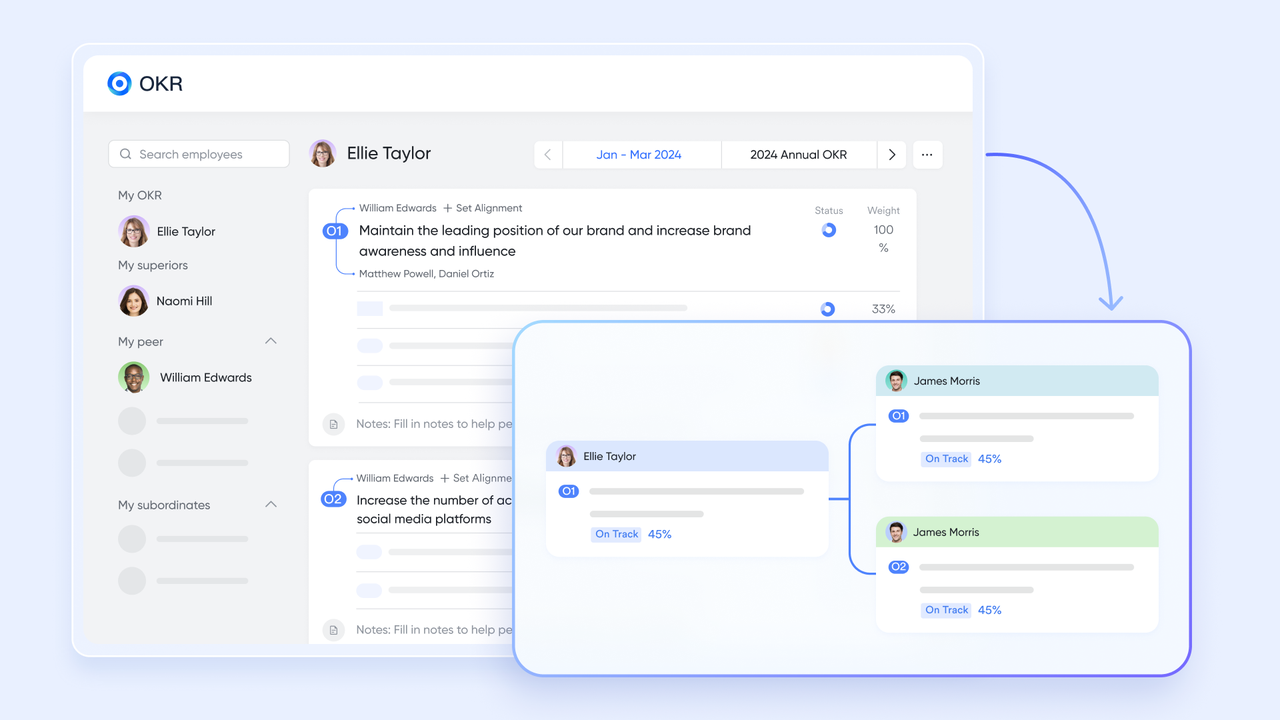
It replaces the "check-in" meeting with real-time transparency. If a key result is falling behind, you don't wait for Friday's meeting to find out; you see the red flag the moment the data changes. This allows for "micro-adjustments" rather than "macro-crises." It keeps the team motivated because they can see the "why" behind their "what" without needing a pep talk from leadership every Monday morning.
Capturing the "why" and preserving intelligence with Lark Minutes
For the few meetings that actually need to happen—like deep-dive brainstorming or complex troubleshooting—Lark Minutes ensures the value isn't lost the second the "End Call" button is pressed. It transcribes the call and automatically highlights key decisions. If someone couldn't make it, they don't need a "recap meeting" or a long-winded email summary.
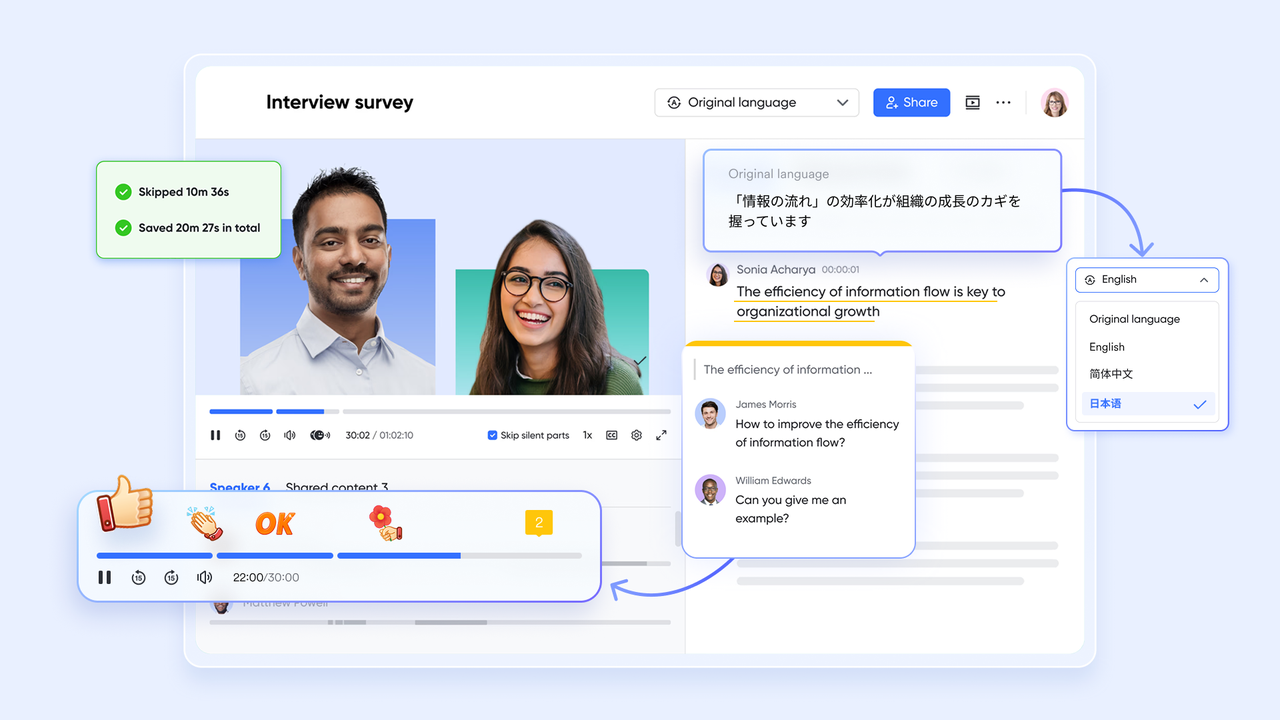
They can just search the transcript for their name or a specific keyword to get up to speed in seconds. It treats the spoken word as a searchable data point, ensuring that once a decision is made, it stays made. This prevents the "circular conversation" trap where teams discuss the same issue three weeks in a row because no one remembered exactly what was settled in the first call. It's about building an organizational memory that doesn't depend on who has the best note-taking skills.
Scaling the shared brain in Lark Wiki
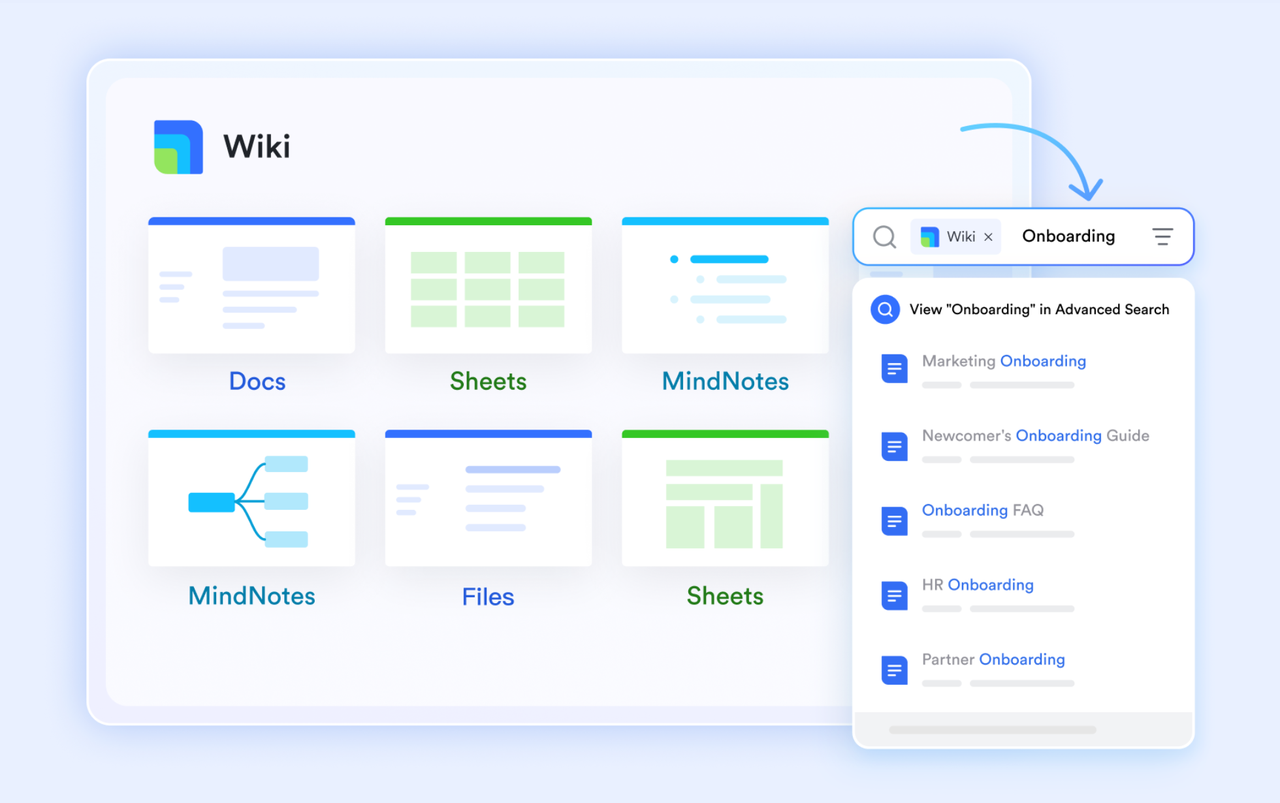
If you're still holding meetings to explain "how we do things here," you're failing at scale. That information belongs in Lark Wiki. It should be a living library that any team member can access in the sidebar while they're in the middle of a project. Whether it's a brand guideline, a technical "how-to," or the company policy on remote work, if it's a permanent piece of knowledge, it doesn't need a meeting. It needs a home.
By removing these "report-style" meetings, you create space for actual collaboration. Your calls become sessions for troubleshooting and building relationships, the stuff that actually requires a human connection. You move away from being a company that "meets" and toward being a company that "ships." In 2026, the most successful teams won't be the ones with the most meetings; they'll be the ones with the best systems for keeping everyone informed without saying a word.
Bonus: The hidden cost of your team's time
When you are looking at how much your company spends on software, it is easy to just look at the monthly bill for things like Slack, Asana, or Zoom. Many managers start their research by checking Google Workspace pricing to get a sense of the "per person" cost for basic email and storage. But the real expense isn't the software—it's the hours your team spends sitting in meetings just because their apps don't talk to each other. If you have to pay for an inbox in one place and a task list in another, you end up paying your team to manually bridge that gap with "sync-up" calls.
Lark fixes this by bringing everything into one view. Because your calendar, your chat, and your project boards are already connected, you don't need to hold a meeting just to see who is busy or what is finished. You aren't just saving money on separate subscriptions; you're giving your team their time back so they can actually do the work you hired them for.
Conclusion
The companies that move fast aren't the ones with the most meetings; they're the ones with the most streamlined systems. Moving to a unified hub means choosing focus. It means deciding that your team's time is more valuable than a perfectly formatted status report. When you bring the chat, the docs, the goals, and the data into one place, the need for "checking in" just vanishes.
By empowering your people with a modern suite of productivity tools, your workspace becomes a place for work, and your meetings finally become a place for progress. We have to stop measuring productivity by how many hours we spend in a conference room (virtual or otherwise) and start measuring it by the velocity of our output. When tools handle coordination, humans are free to handle creation. That is the future of work, and it starts by canceling your next status update.