
What Is Data Lineage (and Why Ecommerce Teams Need It)
August 18, 2026 · 5 min read
Your Shopify dashboard says you did $48,000 last week. Your BI tool says $46,200. Google Analytics shows something else. Now finance wants to know which number is real before the books close, and nobody can explain the gap.
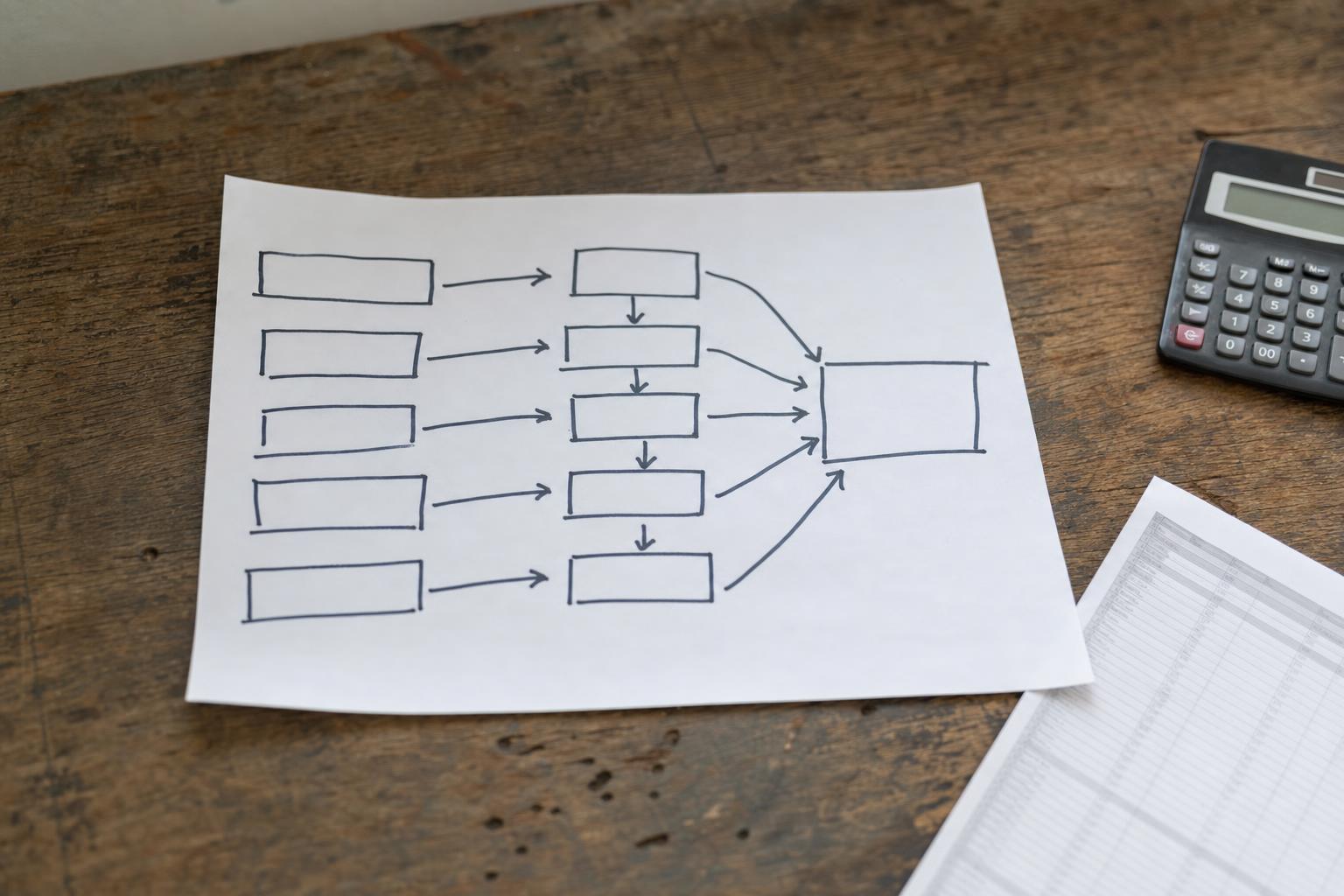
If that sounds familiar, you are not managing a math problem. You are managing a visibility problem. When you sell across Shopify, Amazon, Walmart, Etsy, or TikTok Shop, your numbers pass through several systems before they land in a report. Data lineage maps that journey so you can trace any figure back to its source.
Data lineage is a map of where a piece of data comes from, how it changes, and where it ends up. For an ecommerce team, that number might be gross sales, net revenue, inventory on hand, tax collected, shipping cost, or payout amount.
Upstream refers to the sources that feed a dataset, such as storefront orders, marketplace exports, or a 3PL feed. Downstream includes the dashboards, reports, and models that consume it. Lineage can be tracked at the table level, where one table feeds another, or at the column level, where a specific field feeds a specific metric. Column-level detail matters most for numbers tied to money, tax, inventory, or sensitive customer data.
DataHub's Data Lineage guide is a useful primer on impact analysis, root-cause debugging, and audit trails. The important point is that lineage is not a document you write once and forget. It is most useful when it reflects how data actually moves through your tools.
Four Ecommerce Problems Lineage Helps You Solve
Lineage is not just a governance concept. It maps directly to problems that slow ecommerce teams down each week.
Analytics discrepancies
Reporting differences are common because tools define sessions, conversions, time zones, refunds, and attribution windows differently. Lineage helps you trace each figure back to its definition and find where the numbers diverged.
Inventory accuracy
Oversells and phantom stockouts often trace to a feed, sync, or adjustment that changed without visibility. Lineage shows which system last touched a quantity and which reports depend on it.
Month-end close confidence
When finance questions a margin or payout number, lineage gives you a traceable answer: the source, the transformation, and the final report.
Audit and change management
Lineage also supports impact analysis before upstream changes. If you rename a field, retire a table, or change a calculation, a lineage view shows which reports, jobs, and dashboards may be affected.
Where Lineage Lives in Your Stack
Most modern data platforms capture some lineage natively. A warehouse may show which tables feed other tables. A BI tool may show which dashboards depend on a dataset. Tools in Snowflake, BigQuery, Databricks, and Power BI can expose parts of this picture, depending on how your stack is configured.
Cross-system lineage matters because ecommerce data rarely stays in one place. It crosses storefronts, marketplaces, a warehouse or WMS, a 3PL, an ETL layer, your data warehouse, and finally BI. This kind of visibility becomes even more valuable when sales, marketing, and operations rely on the same underlying data, ensuring every team works from consistent metrics instead of conflicting reports. DataHub and other catalog tools can help teams connect technical lineage, such as queries, jobs, and columns, with business lineage, such as orders, payouts, and margin definitions.
Standards can help too. OpenLineage defines an open approach for collecting lineage events across common pipeline tools. You do not need to standardize everything on day one, but it helps to know whether your tools can share lineage instead of trapping it in separate screens.
A Five-Step Starter Plan for One Afternoon
You do not need a full data team to begin. Start small, map the flows that carry the most risk, and expand once people trust the process.
- Pick three money flows. Orders, payouts, and inventory are the usual first three because errors in these areas cost the most.
- List sources and consumers. Note every system that feeds each flow, such as Shopify, Amazon, a WMS, a 3PL, accounting software, and every report that reads from it.
- Document dependencies and owners. Write down the current queries, joins, exports, and manual steps, including anywhere a person is rekeying figures off a PDF or supplier invoice, since structured data extraction removes exactly the kind of undocumented handoff that breaks lineage. Name one person responsible for each flow.
- Turn on native lineage. Enable it wherever your tools support it. Add column-level detail for tax, fees, discounts, refunds, and payouts.
- Add two quality checks per flow. A freshness check and a null or duplicate check catch many issues early.
Quick Wins You Can Expect
Once a few flows are mapped, the payoff shows up in ordinary work.
- Debug a broken KPI. When a metric jumps overnight, trace upstream to find the schema change, late file, or bad feed behind it.
- Run impact analysis. Before deprecating a table or field, check what depends on it so you do not silently break a report.
- Keep a clearer compliance trail. Track where sensitive fields travel across systems and reports, which can support audit readiness.
- Settle disputed numbers. Explain a margin or payout figure at month-end by walking the number from source to report.
Common Pitfalls and How to Avoid Them
A few habits quietly undermine lineage efforts. Watch for these:
- Relying only on static diagrams. A hand-drawn map goes stale fast. Prefer lineage that updates from actual queries and jobs when possible.
- Skipping BI and report lineage. The last mile, from warehouse to dashboard, is where many discrepancies hide.
- Ignoring column-level detail where it counts. Table-level views help, but they are not enough for fields tied to money, tax, or sensitive data.
- Leaving ownership unclear. A lineage graph nobody maintains becomes fiction. Assign an owner per flow and review ownership when teams change.
Making Lineage Useful for Non-Technical Teammates
Lineage only pays off when finance and operations trust it. Start with order-to-payout reconciliation and inventory adjustments, since those are the flows people question most. Log changes in plain language so a controller or operations lead can follow them.
Whether you use DataHub, a BI lineage view, or a simple spreadsheet at first, frame lineage as a way to answer a practical question: where did this number come from? A short walkthrough for the team that closes the books each month usually does more than a polished diagram that nobody uses, especially when the goal is accurate ecommerce accounting.
Frequently Asked Questions
What is the difference between data lineage and provenance?
Provenance describes the origin of a dataset. Lineage is broader. It covers the origin, each transformation, and each downstream consumer along the way.
Do small shops really need data lineage?
Yes, if their numbers pass through more than one tool. If you reconcile payouts, track inventory, and report in a dashboard, you already have a chain worth mapping.
Can I use lineage without a full data warehouse?
Yes. You can document sources, transformations, and consumers by hand, then adopt native lineage as your tools support it. A warehouse helps, but it is not required.
How does lineage help with audits?
Lineage gives you a traceable path from a reported figure back to its source, plus a record of what depends on each field.
How often should I update lineage?
Update lineage whenever a schema changes and review core flows on a regular cadence, such as monthly around close.