

NVIDIA Eureka
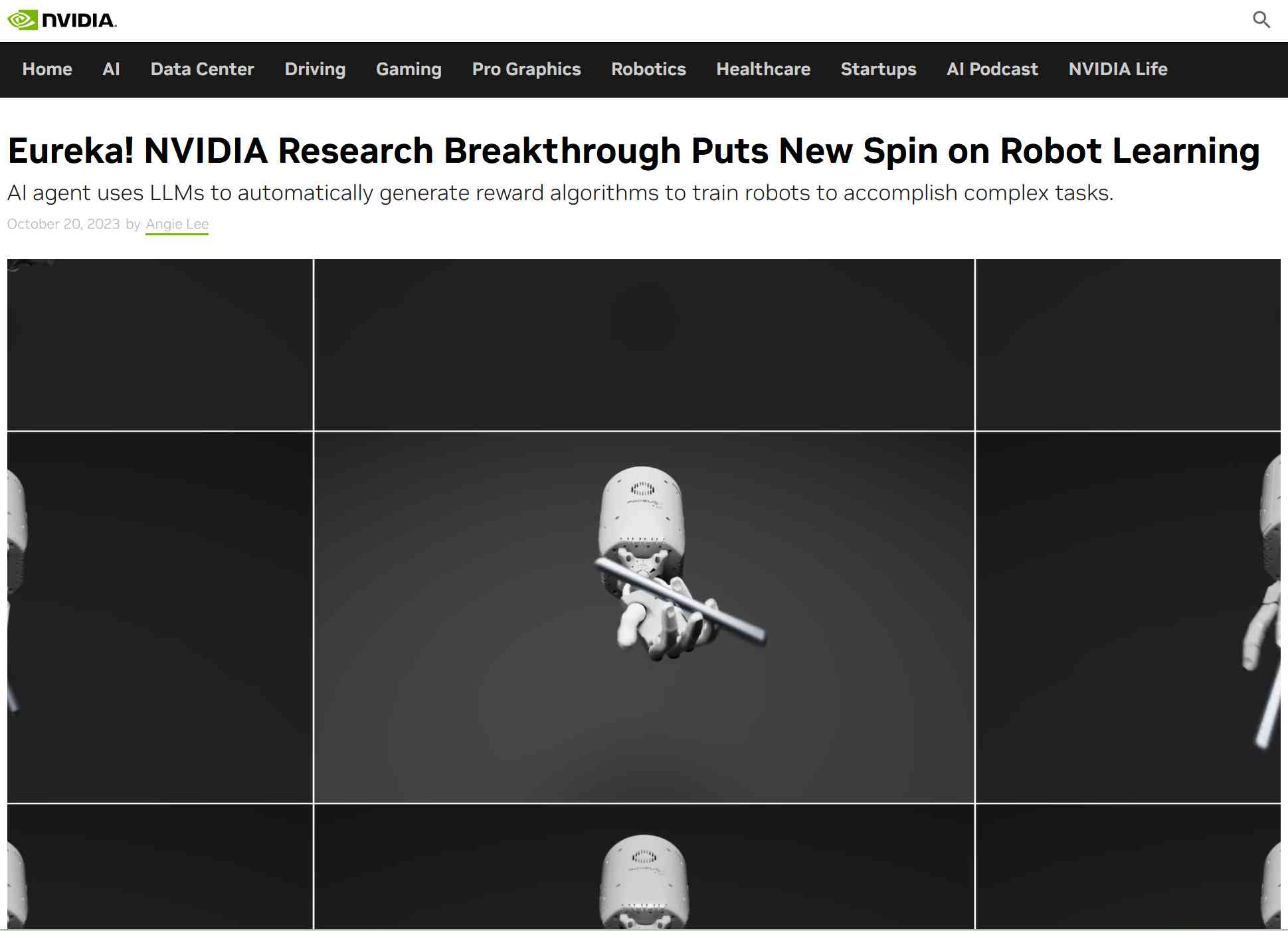
Overview
NVIDIA Eureka is robotics research that generates and evaluates reward functions for reinforcement learning. Researchers supply tasks, simulation and compute.
NVIDIA Eureka is robotics research that generates and evaluates reward functions for reinforcement learning. Researchers supply tasks, simulation and compute.
Eureka generates reward-function candidates and evaluates them through a researcher-configured training loop. People supply the task, simulation environment, model access, compute and evaluation criteria and review the result. Automated reward search is not a general-purpose robot operating without human design.
Research code access is separate from model and GPU training costs.
Product overview
Capabilities, pricing and fit
NVIDIA Eureka is robotics research that generates and evaluates reward functions for reinforcement learning. Researchers supply tasks, simulation and compute.
Information as of July 30, 2026
What it can do
- Product role
NVIDIA Eureka is robotics research that generates and evaluates reward functions for reinforcement learning. Researchers supply tasks, simulation and compute.[1]
Where it fits best
- Researching reward functions for robot learning[1]
Sources (1)
- blogs.nvidia.com — product detailsOfficial site · checked 2026-10-15
Autonomy level
65/100
Our subjective rating of how independently the product carries out its documented tasks, considering the human setup, input, approval and review it needs. This is not a measured success rate.
Comparisons
Custom Comparisons
Some of the use cases of NVIDIA Eureka:
- Researching reward functions for robot learning
Loading Community Opinions...
Pricing model:
Code access:
Popularity level: 77%
NVIDIA Eureka Video:
Turn this profile into a trust signal
Show prospects that NVIDIA Eureka has a public place where they can check product details, pricing, ratings, and reviews.
Build confidence
Give buyers a third-party profile to explore.
Reduce hesitation
Put validation beside your strongest CTA.
Earn discovery
Every badge links prospects to your listing.
Choose your style
Preview it, then copy the complete embed code.
Shows buyers where to validate your product, pricing, and reputation.
Plain HTML. No signup, script, or maintenance required.
 AI Agent Store · Specialist AI agents
For robotics research teams
Your AI agent for robot reward-function experiments.
Exploring NVIDIA Eureka? For robotics research teams, your own AI agent can reconcile experiment setups, analyse robotics runs, and maintain research artefacts. Start with a setup tailored to this work.
- ✓ Reconcile experiment setups
- ✓ Analyse robotics runs
- ✓ Maintain research artefacts
Tailored starting setup. Chat on our site. See the workflow and monthly plan.